Friday, August 04, 2006

Too deep for tears


There is a great summer stillness under the high cloud blanket. It is our 48th wedding anniversary and that distant commemorated day seems such a long time ago.

An autumnal theme is starting to prevail in M3: dry grass, leaves fading from pale buff to umber black, often fretted with holes by July insects or scribbled with their leaf mines.

There are a few weary bees on the flowers gathering the last of the honey and pollen.

I sat thinking about the reasons why some people respond passionately to nature while others are little moved, or indifferent. Immanuel Kant in his Critique of Judgement (1790) argued that ‘enjoyment’ is the result when pleasure arises from sensation, but judging something to be ‘beautiful’ has a third requirement: sensation must give rise to pleasure by engaging our capacities of reflective contemplation.

The ardent naturalist seems often to be moved to a deep and meaningful contemplation by what is perceived as the beauty of wild things.

Maybe Wordsworth had read Kant. His Intimations of Immortality from Recollections of Early Childhood completed in 1804, the year of Kant’s death, ends with the lines:

Thanks to the human heart by which we live,
Thanks to its tenderness, its joys and fears,
To me the meanest flower that blows can give
Thoughts that do often lie too deep for tears.

Tuesday, August 01, 2006

Today was hay-cutting day ...


Today (31 July) was hay-cutting day for Mice & Red but I was busy and out a lot and I forgot. No matter, I will go for it on 1 August.

I did make a brief evening visit and simply sat there and enjoyed the relative coolness; enjoyed watching a rosy-flounced tabby, nectaring with evident satisfaction on flowers of ragwort. These attractive little pyralid moths, Endotricha flammealis, have been much in evidence this year.

July we learn has been the hottest month on record in Britain since records began in 1914 with an average day and night temperature of 17.8°C. The main effect this seems to have had in M3 is that some of the July flowers are going over to seed more quickly. This, of course, may be because there has been an almost continuous opportunity in the daytime for insect pollination rather than the heat per se.

I have bought a simple rain gauge and have set it up near M3 to see how much rain we actually do get. On this last day of July we did have a heavy shower at about 8pm and there was more rain overnight: it won’t fill the reservoirs, but it might help some of the plants along.

Friday, July 28, 2006

A dusk visit

I try to visit M3 every day and usually write enough words to fill up a side or two of a standard 5 inch x 3 inch index card. Today I said:

A dusk visit after a day at Woods Mill. Wild silver y moths dash through the still, cricket-haunted air on a grey blur of wings. There are quieter midges and mosquitoes too like dust motes in the gloom.

Blackbirds sound the alarm in the wood and somewhere there are crooning pigeons.

No rain today and the ground looks brown and dry, but high above the quintet of flowers – ragwort, hogweed, rosebay, knapweed, hypericum - plays on like the band on the deck of the Titanic.

Thursday, July 27, 2006

Ragwort in the heatwave


In the hottest part of the day the leaves on the ragwort Senecio jacobaea in The Metre all turn upside down, exposing the somewhat silvery underside to the sunshine and presumably thus reducing water loss.

It is remarkable that they do not simply wilt but actually manage to turn through 180 degrees. This indicates there is some mechanism within the leaf stalk that twists one way or another as the temperature rises.

There was a little rain this evening, but it scarcely wet the ground. However, most of the plants do not seem particularly stressed yet.

Tuesday, July 25, 2006

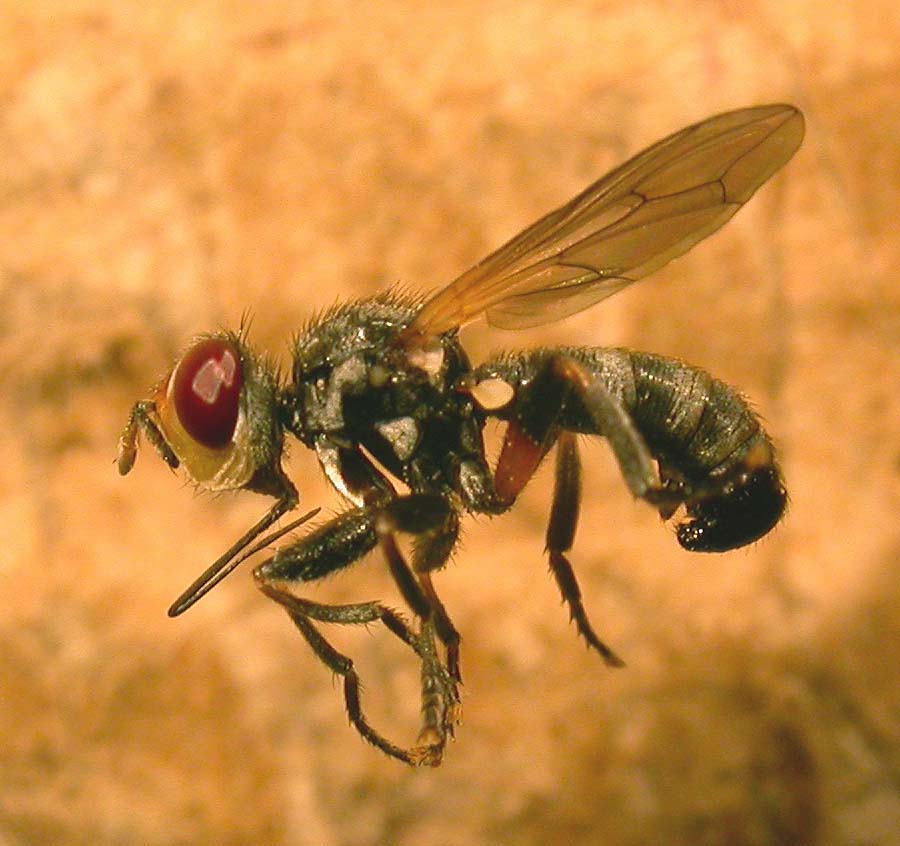
A conopid fly - Thecophora sp.


Late this afternoon I was giving some detailed scrutiny to the ragwort in M3 when I noticed a small, unusually-shaped fly visiting some of the flowers. I tried to photograph it, but is was too fast and eventually I caught it.

It turned out to be a Thecophora species parasitic on solitary bees.

Again, as with the smaller plants, I often first spot things like this through binoculars having sat quietly for a while. Many entomologists, I suspect, walk through an area, but rarely stop, wait and watch, so they just do not see many of the things that are about.
I originally had this down as Zodion cinereum and I am grateful to Jere for correcting this.

Monday, July 24, 2006

Heather and holly


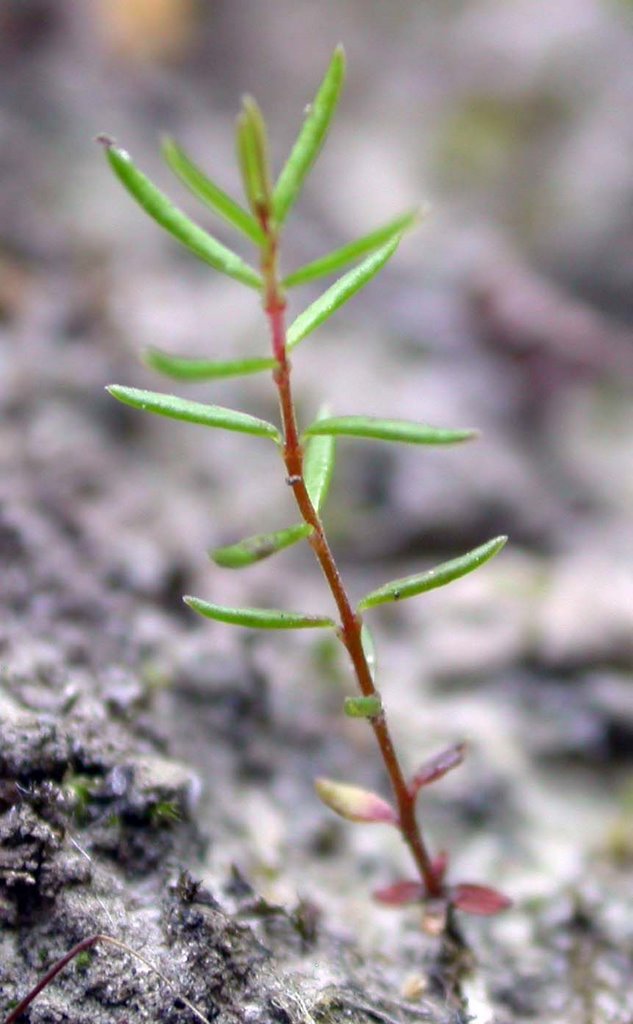
In cutting back some of the longer vegetation I have discovered two plants in The Waste that I have not previously recorded in this project. One is a holly, Ilex aquifolium, and the other (I think) bell heather, Erica cinerea.

The first of these is growing close to the southern edge of M3 while the other is in the bare soil of Great Plantain Desert. Both were discovered using close focus binoculars and the heather in particular is very tiny and inconspicuous.

Holly seeds have a long and complicated germination pattern. The seed may travel through the gut of a bird in winter and the embryo starts to develop during the following warmer months. It then needs a period of cold stratification before germinating in its second spring. So, at a minimum, the seed of my holly settled into its position in winter 2004/5.

The bell heather is, I think, unlikely to be a natural arrival as our nearest wild heather patches are some way away. We do grow a few plants in the garden, or it may have come in as seed on my boots - who knows. Given the right conditions I think this and ling, Calluna vulgaris, are quite good at spreading themselves provided they can find open,non-calcareous soil.

Sunday, July 16, 2006

Two-spotted neb moth, Eulamprotes atrella


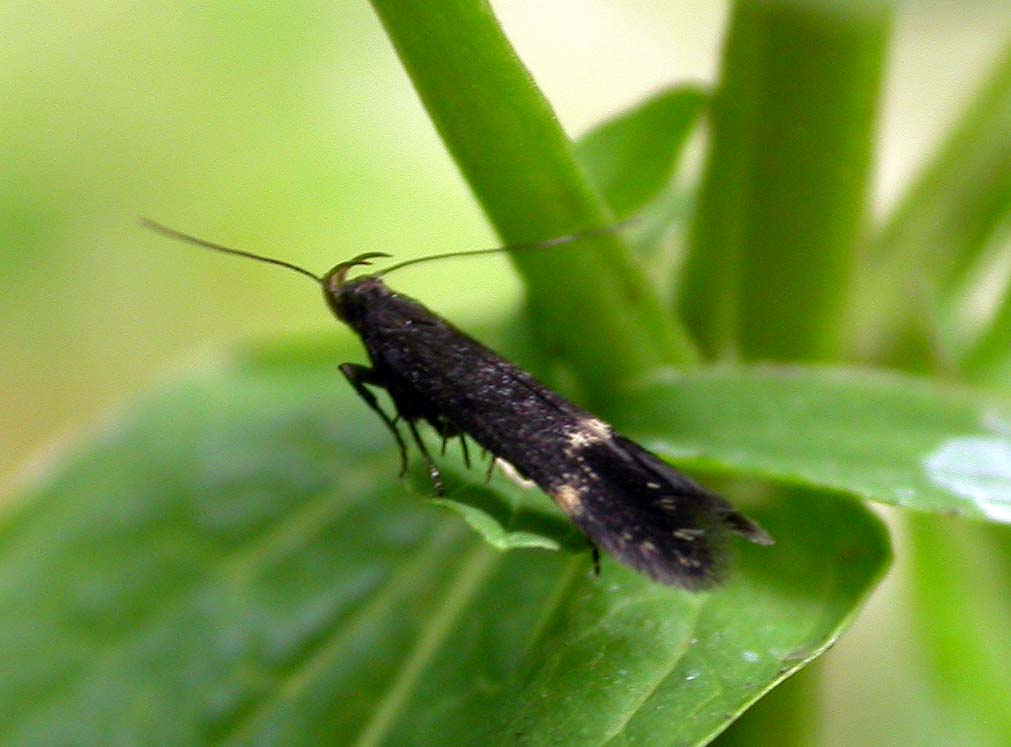
As I sat contemplating life, the Universe and all that by M3 this evening, I noticed a small black insect resting in a leaf axil of one of the square-stalked St. John's-wort plants. I managed to get a photo before it flew off and saw it again a few moments later on a figwort leaf.

It was a two-spotted neb moth, Eulamprotes atrella, a tiny micro whose larvae feed on St. John's-worts. I made no attempt to capture the insect and am confident that it can be safely determined from the photo. This is a first for M3 and the only previous Sussex record in the Sussex Biodiversity Record Centre's database is from Cow Gap at Beachy Head.

Friday, June 30, 2006

Aspects of ragwort, Senecio jacobaea


As the ragwort plants in M3 come up to flowering, they present a variety of forms from the rich purple stems below to the tightly packed buds above and the intricately cut leaves in between.

The plants will flower for many weeks, until deep into the autumn and, judging by previous years, will attract a wide range of invertebrates.

After flowering they will die and this is one of the best ways of getting rid of ragwort if you don't want it as the seeds normally only germinate in bare, scuffed ground (like overgrazed horse fields).

Wednesday, June 28, 2006

The red ant Myrmica ruginodis


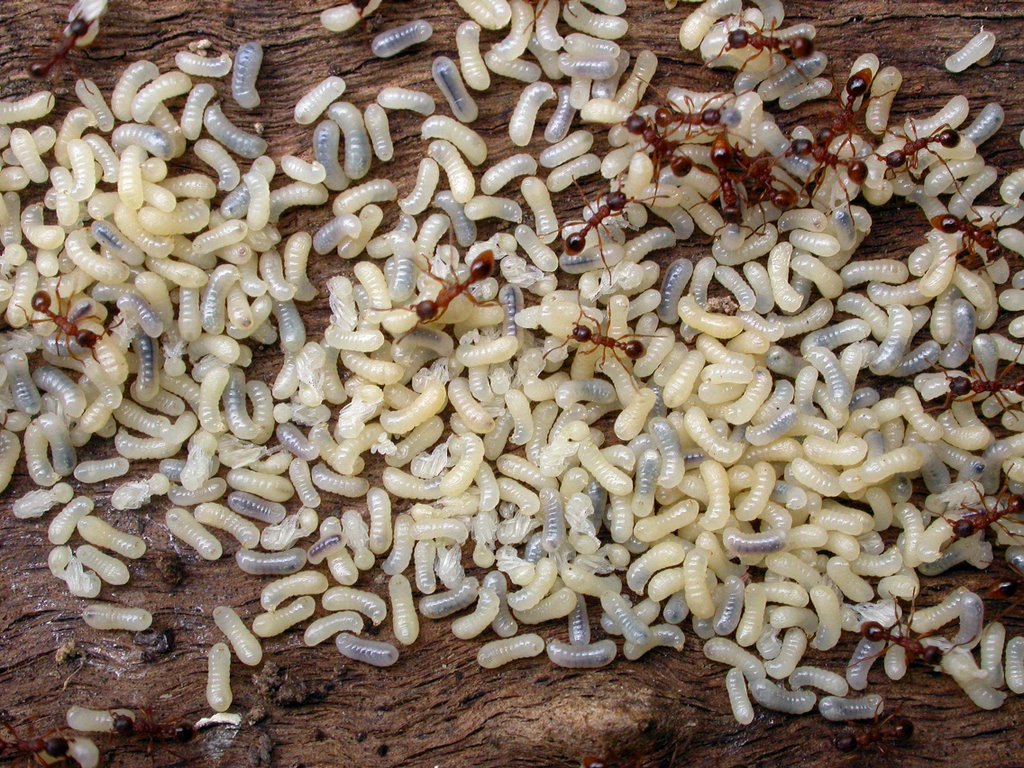
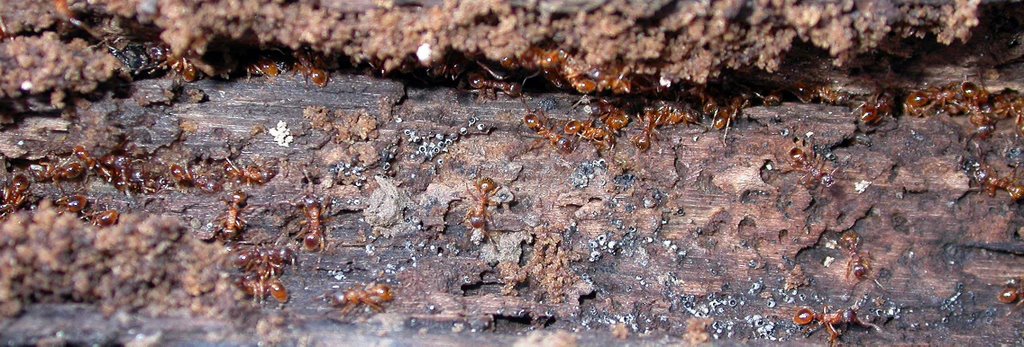
This insect is one of the most intrigueing in M3 as it moves about en masse from place to place and occasionally disappears altogether. In the warmer months these ants are often busy under Gingerbread Refuge, a piece of wood at the base of the north wall of logs. Once I saw them winding their way in a column up the dead stalk of a marsh thistle plant like pilgrims ascending the outside stairway of the Malwiyya, the spiral minaret of the Great Mosque of Samarra.

In winter they go to ground somewhere and emerge during the first warmer days of spring. Recently they abandoned Gingerbread Refuge, but a few days ago they started coming back and today I found them with the brood of larvae (see photo above) which, I suspect, must have been brought up from secret chambers somewhere underground to be in a warmer place so as to complete their development more quickly.

As with the slugs, it is difficult to understand quite what these and the other ants live on. Whatever it is there must be plenty of it, but all I ever see is the stray worker lugging some bit of detritus towards the nest.

These red ants are often accompanied by tiny, white springtails called Cyphoderus albinus that rush around among the workers like an animated pieces of scurf. When the ants go Cyphoderus goes too like a camp follower.

These ants put up with a lot from me as I turn over the various refuges under which they shelter, but they are great survivors and I admire their industry and tenacity and their long season of complex activity.

Monday, June 26, 2006

Smooth Hawksbeard, Crepis capillaris


One of the most characteristic plants of M3, the smooth hawksbeard, is now flowering well and, if it is reasonably mild, it will continue into January. Like many composites (Asteraceae) the flowers of this widespread plant open in the morning and are usually closed by mid-afternoon whatever the weather.

The leaves are very bitter and, while they are sometimes used in salads in mainland Europe, they are eaten by very few animals and there are always many undamaged wintergreen plants. I have seen recipes for a country wine made from the flowers too (like dandelion wine), but I suspect there are far better options for the home wine-maker.

The plant is surprisingly polymorphic, some examples having quite deeply serrated leaves while others are almost smooth in outline. M3 has flowering plants over a metre tall and some less than 10cm. Mostly they are biennial, but some plants appear in spring and flower by late summer.

The flowers at this time of year are usually crowded with the small, black Meligethes beetles shown in the picture, but so far in 2006 they have been rather scarce. I am trying to find out if this fall in number is widespread.

Tuesday, June 20, 2006

Common figwort beetles


Recently the two plants of common figwort, Scrophularia nodosa,in M3 have started flowering. Not exactly showy things, but with a quiet, velvety brown and green beauty.

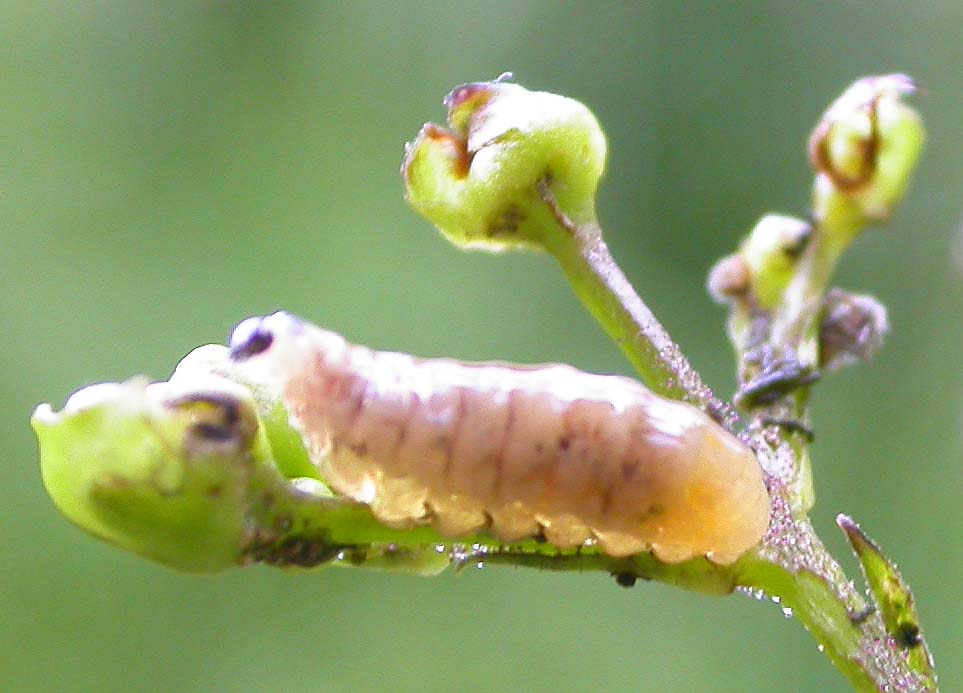
This morning I spotted several slug-like caterpillars in the flower head of one of the plants where they had been making a fine mess chewing the blooms to pieces. I think they must be larvae of one of the Ciona weevils,probably C. scrophulariae, but I shall have to wait for some adults to absolutely sure.

By the evening they had all gone, either to pupate, or because they had been eaten by something.

Sunday, June 18, 2006

An old bone


Today I found an ancient, or fairly ancient, piece of bone about 6 or 7 metres to the south of M3 on the other side of the path through The Meadow. It looks like the sawn off head of a cow's femur.

I cannot recall ever buying anything like that, so it may have been transported into the garden by a fox or badger or one of the children. Anyway, I have put it on a high point of newly cut Waste in a sunny position between Butterfly Rock and the Lyon Stone. I particularly want to see if lichens or special mosses develop on it, though a fox or badger or child may take it away before this has time to happen.

As time goes by this project looks more and more like a bower bird's nest.

Saturday, June 17, 2006

A lesser housefly, Fannia similis


Every summer I come across dozens of flies like this in M3. Although they look similar – the little brown jobs of the fly world – they have many small differences between species. In the case of this group it is particularly the bristles of the legs, head and thorax that help to define each species.

The genus Fannia has many species ranging from orange yellow to jet black. They breed in a wide range of decaying vegetable materials and other substrates and present the entomologist with that fascination of subtle variations on a theme that one often encounters with wildlife and, indeed, many other areas. Stamp collectors, for example, often pay large sums of money for stamps with minor imperfections or variations and there are many sought after forms of our ordinary, non-commemorative British postage stamp (the Machin definitive).

This is the sixth Fannia species that I have recorded in the Square Metre.

Sunday, June 11, 2006

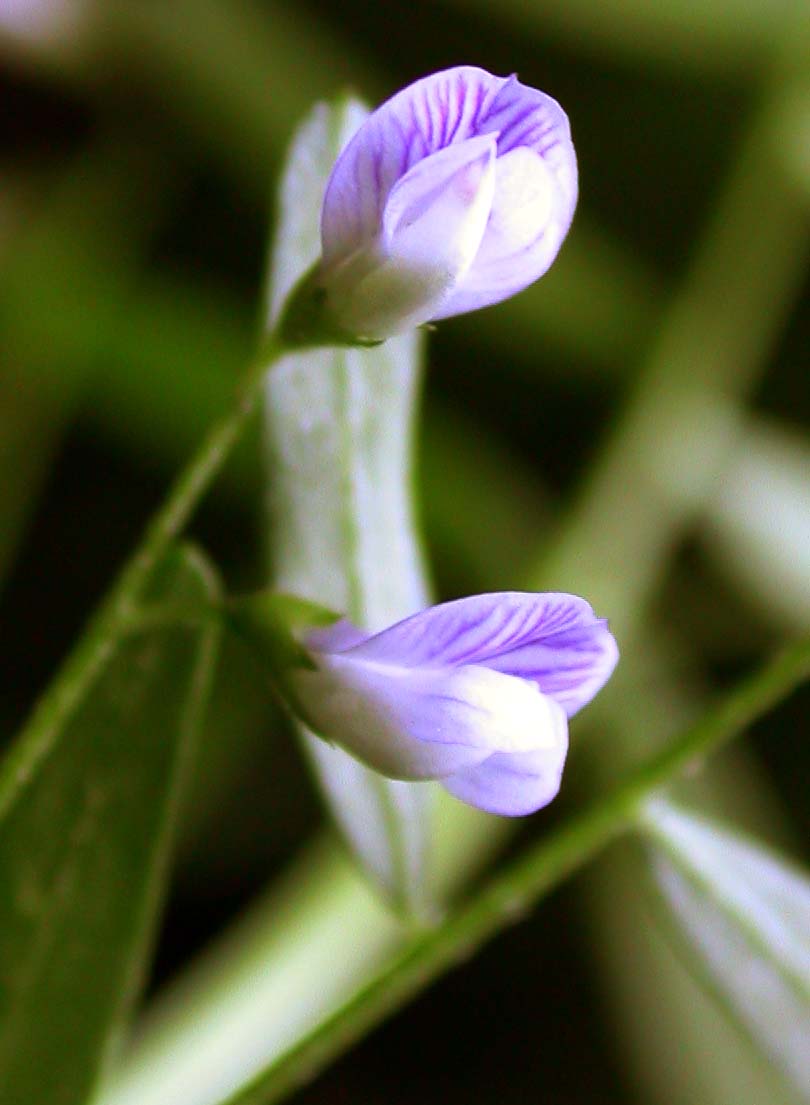
Smooth tare, Vicia tetrasperma

The smooth tares in M3 are now in full flower, though that seems a bit of an overstatement for something as tiny and inconspicuous as these blooms.

In close up they are attractive and patterned with what look like pollen guides, but I have never seen any insect make a visit (though this can sometimes happen after dark). However, they set plenty of seed so are presumably self-pollinating. Soon their four-seeded pods will develop: mouse peas as they were sometimes called.

Tuesday, June 06, 2006

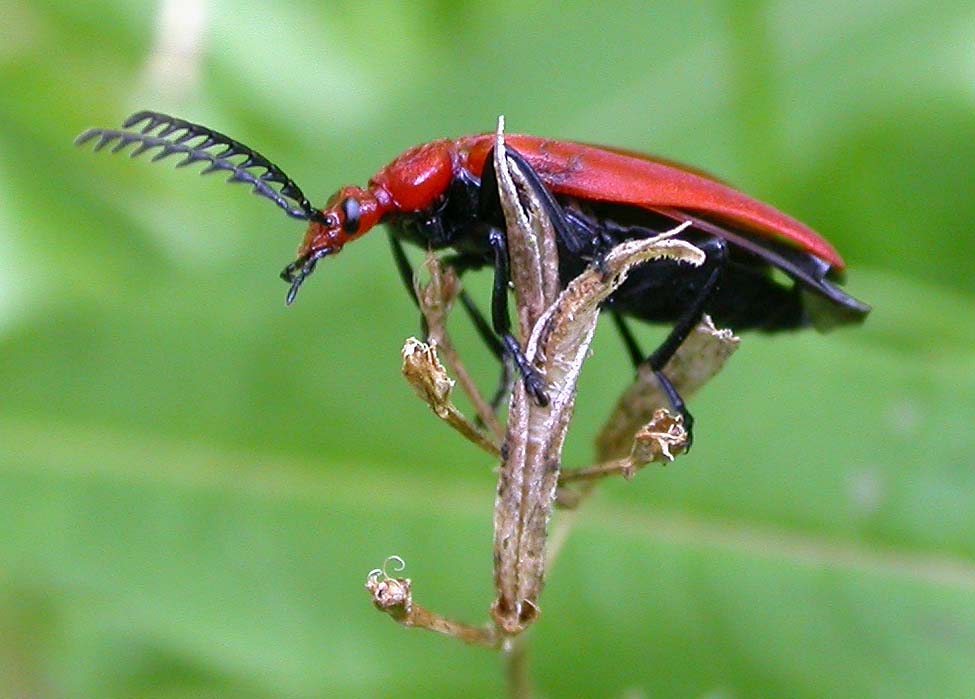
Common cardinal beetle, Pyrochroa serraticornis

Every year a few of these beetles appear in the Metre at the end of May and beginning of June, having spent their early stages in dead wood somewhere nearby.

Usually they are very active in the daytime scrambling over the vegetation like slow acrobats. They are quite large beetles and they weigh plants down, so they sway in gentle parabolas from one stalk or leaf to another. There is a scarcer relative, the black-headed cardinal beetle. It does occur in the neighbourhood, but I await the pleasure of welcoming one to M3.

Monday, June 05, 2006

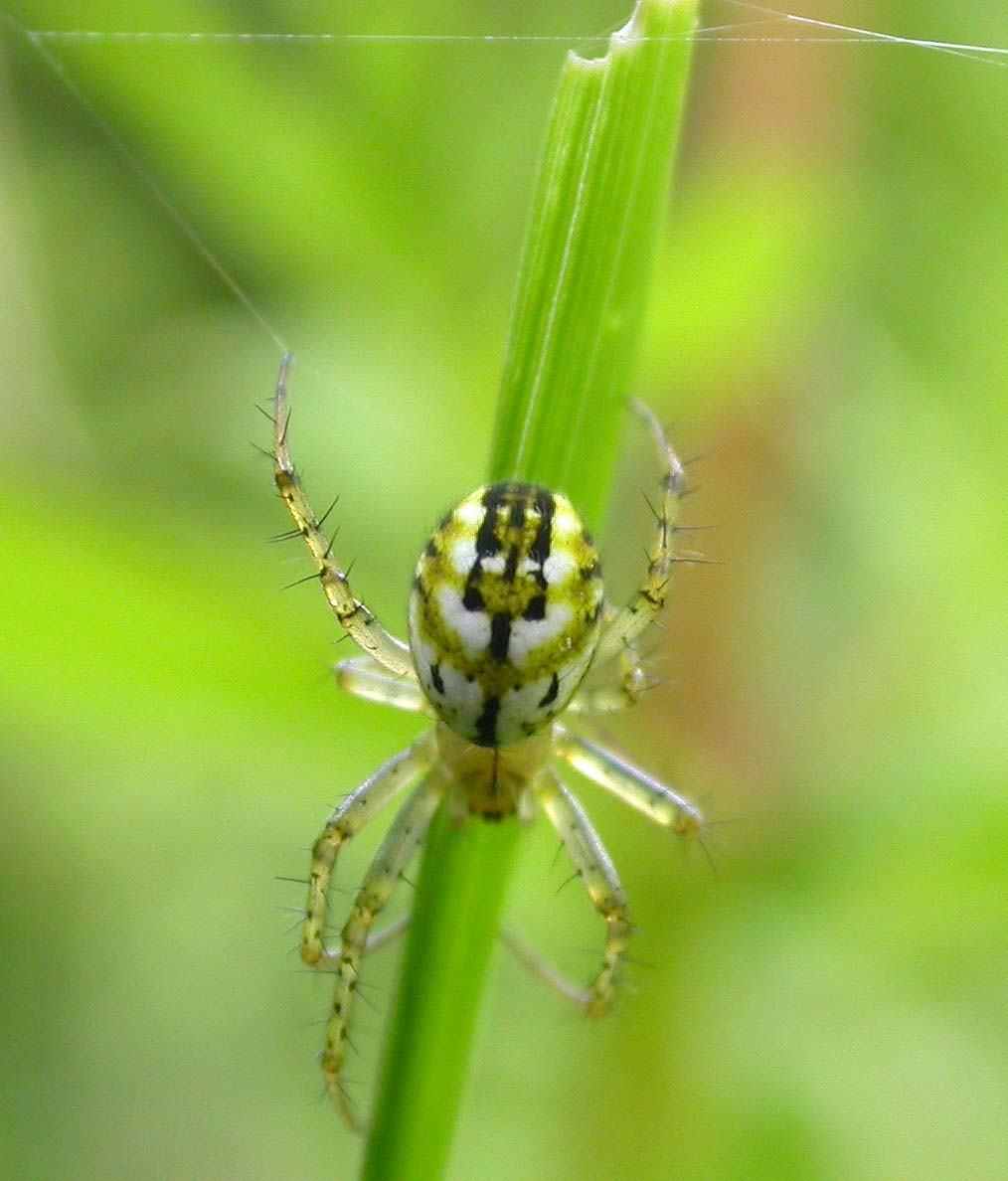
An orb web spider, Mangora acalypha

A very attractive small orb web spider, Mangora acalypha, appeared in The Waste today spinning a web between one of the rosebay plants and some grasses.

Although widespread in southern England, often in heathland locations, there seem to be rather few Sussex records, from the heaths in the centre and west of the area and in my own parish of Sedlescombe about 500 metres from home

Saturday, June 03, 2006

The June view

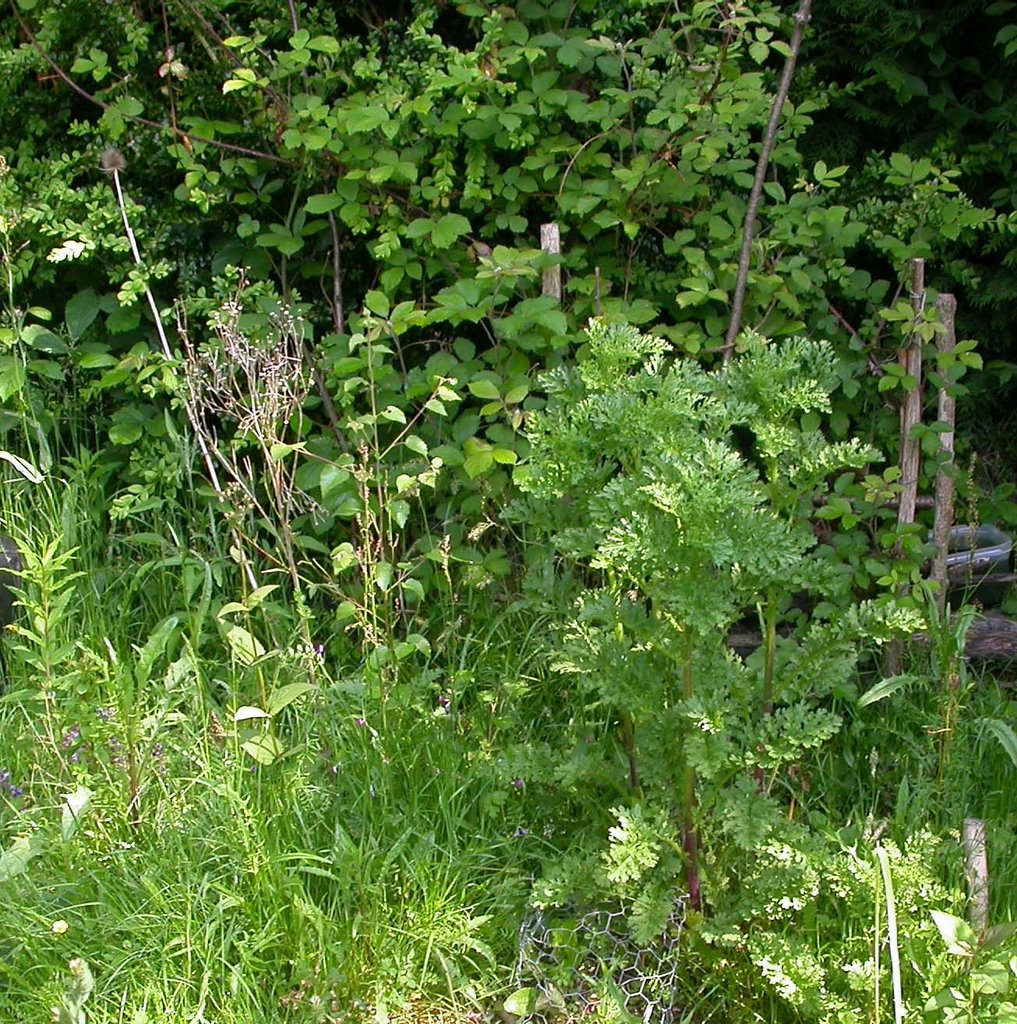
I thought it might be worth posting a photograph of the Square Metre at the beginning of each month just to show what it looks like. So here is the June picture taken square on from the south. Trouble is the photograph does not really look much like the real thing with the eye constantly focussing and re-focussing on the detail.

Features in the picture include the tall, 5-stemmed ragwort towards the right and the dead ragwort from last year left of the birch tree. Bits of box are poking through the brambles trained up North Wall. In front there is the wire netting guard to stop rabbits eating the dandelion, Taraxacum pseudohamatum. The wire could go now.

Thursday, June 01, 2006

June is here

Though it remains cool and damp with frequent rain showers, the evening Metre presents a splendid orchestration of green shades and shapes lit here and there by soprano notes of magenta and yellow and basses of dark purple and brown. There are highlights and shadows, silvered droplets and quantum entanglements of leaf and air.

Writing, as I often seem to do, about the indescribable complexity of late spring M3 brings the artist Monet to mind and the way he painted and re-painted his lily pond and other subjects: always different and always the same.

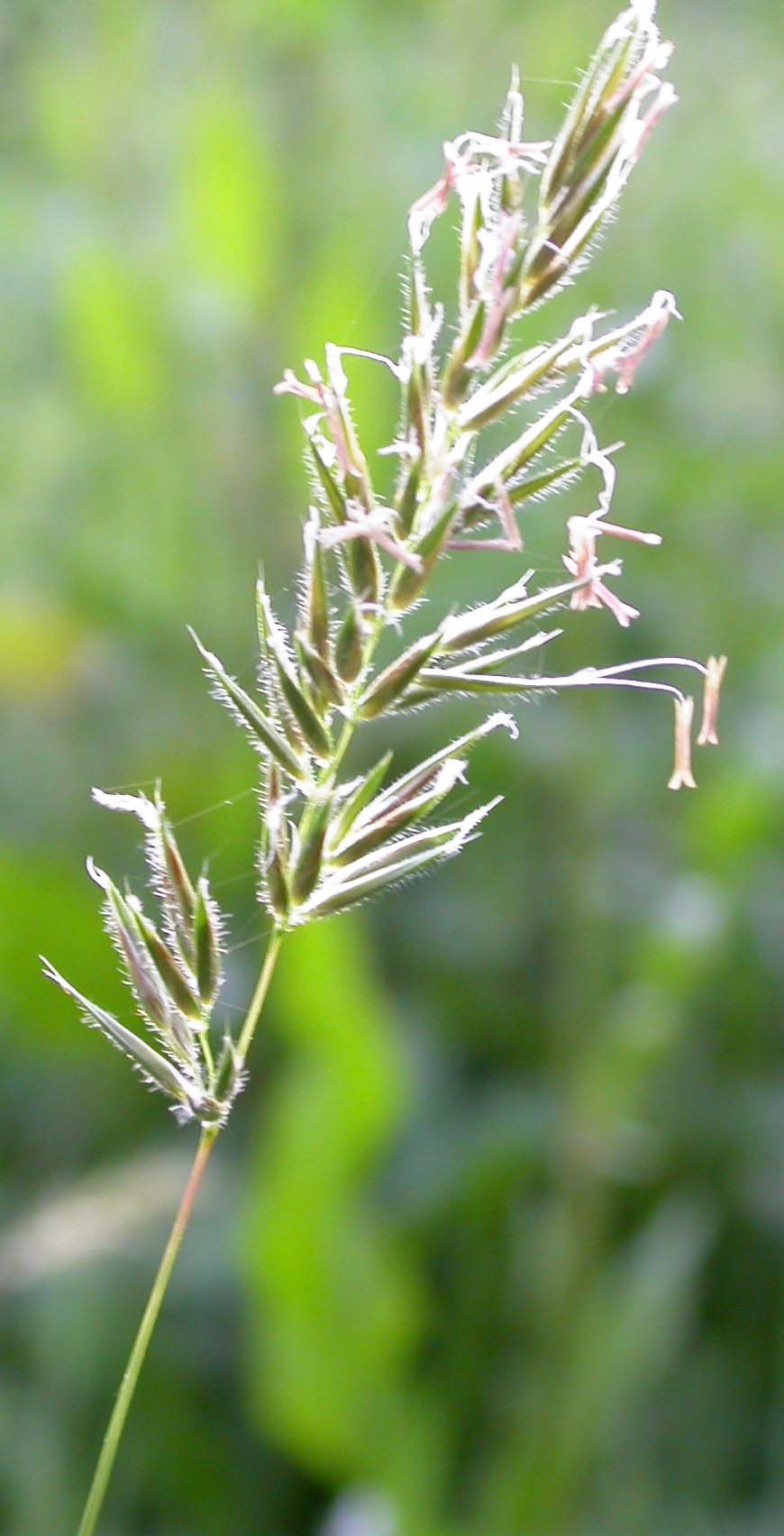
In front of North Wall the marmite green bottle brushes of ripening sweet vernal grass spikes remind me of Australian callistemons.

As though to echo my own ruminations the sorrel, the ragwort and the birch have all reached to about one metre tall, all seem to stand within an invisible cube or a ball of air.

The birds sing, the bees hum, the midgelets bite my head. It is the first evening of another month, the month when haymaking starts, the month of midsummer.

Monday, May 29, 2006

Wet wasp beetle

The weather remains cold and damp and the few insects that are about in the square metre looked hunched and miserable as they take shelter in the vegetation.

This evening in the top of the tall ragwort there was a scorpion fly and the wasp beetle, Clytus arietis, shown above. Notice the eye-like drop of water on its thorax. The larvae of the wasp beetle live in dead wood, usually of willow or birch, so it probably spent its early life in the birch log that straddles M3.

Saturday, May 27, 2006

The philosophy plant

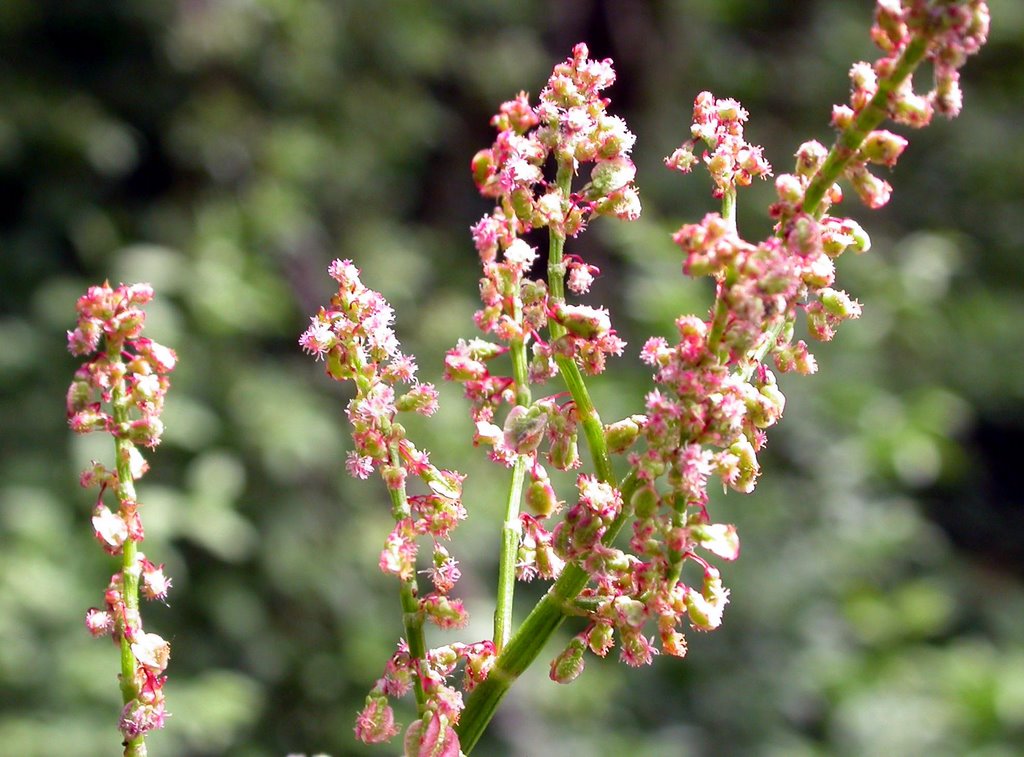
One of our young granddaughters joined me on an evening visit to M3. “Do you know what philosophy is?”, I asked as I was about to expatiate on some abstruse topic. “Is it this?” she replied, touching the pink and green flowering top of a sorrel spire with her hand. “No” I said, “that’s sorrel”, but I reflected that ‘philosophy’ did sound a bit like ‘Gypsophila’ or ‘Felicia’. A short while afterwards I asked granddaughter how many plants she could name. “Well, there’s this one called ‘philosophy’” she said pointing to the sorrel.

I shall henceforward think of sorrel as philosophy (I wondered if it was through some process like this that honesty, Lunaria annua, got its name).

The wet leaves of the philosophy and other plants are lightly spotted with round white confetti, the small petals that have blown from the nearby rowan tree.

Thursday, May 25, 2006

Pygmy woodlice

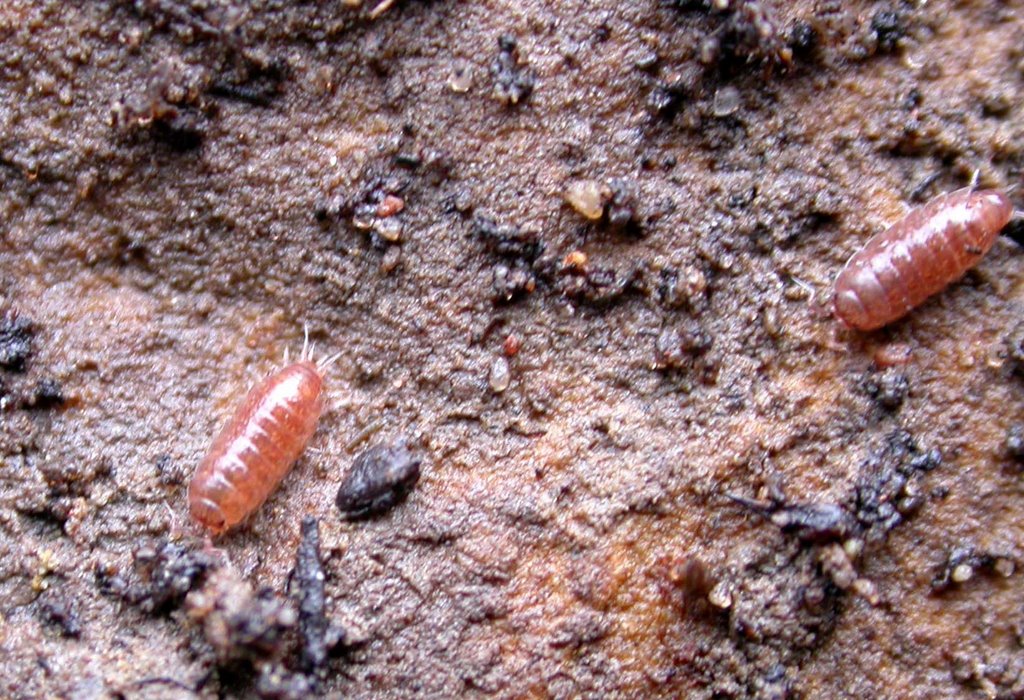
It rained very heavily during the night and there were maybe twenty of the 5mm long common pygmy woodlice, Trichoniscus pusillus, running about on the underside of Pitfall Rock. There are often one or two but I have never seen as many as this and I assume it was their way of avoiding the wet.

This species is thought to be the commonest woodlouse in Britain with up to 500 individuals per square metre, though I would rather doubt there are as many as that in M3.

There were also far fewer wrinkled ants under Gingerbread Refuge and it looks as though they may be abandoning this nesting site as they have done in previous summers.

Purple punctuation


The lush May grass was weighed down by cold droplets of rain.

Walking round Troy Track flowers of narrow-leaved vetch, Vicia sativa ssp. nigra appeared and disapeared in The Waste and M3 as my angle of view changed: deep magenta starships sailing in a green firmament.

These purple punctuations, though tiny, giving telling highlights to the rain-soaked monotone of the grass. They are the sort of thing that would hardly be visible in a longer shot than that above and their landscape effect can only be fully enjoyed by direct contact with the living eye.

Tuesday, May 23, 2006

Early hair-grass

I have discovered a tiny grass, about 5cm high, growing and flowering in part of The Waste. It is early hair-grass, Aira praecox, and it must be one of the easiest plants in the world to overlook.

In addition to the one in flower there are two or three others in the same area not in flower. This is the bare patch I call 'Great Plantain Desert'. I have made this area of largely bare soil by simply weeding out most of the grass and other vegetation with my fingers. If a seedling appears, I leave it there until I have worked out what it is and I then decide whether to pull it up or not.

The mystery is how did the early hair-grass get there. I have not seen it eslewhere in the garden, though it is easily overlooked, and there are not many suitable habitats

Monday, May 22, 2006

Wolf's milk


The fungus-like objects in the picture are young fruit bodies of the slime-mould Lycogala terrestre, often known as wolf's milk. They appear every spring on the birch log that divides the square metre in half.

The term 'wolf's milk' is thought to be due to the opaque, pinkish-orange droplets that often emerge from the fruits and it has been suggested that, appearing in rows as they do, they have some resemblance to a she-wolf's teats. The name Lycogala, which means 'wolf's milk' was coined in the 18th century by Michel Adanson, a French botanist of Scottish ancestry. I have not, however, been able to locate his explanation for the name and, since he left a vast corpus of many volumes of manuscript, I think I might let the matter rest there.

Sunday, May 21, 2006

Death in the dandelions


After I took what I thought might be an arty photo of a back-lit dandelion clock, I discovered a small drama.

A crab spider, Misumena vatia, had captured a solitary bee (possibly a Halictus species) and was enjoying the meal. I did not notice this struggle at all when I took the picture: it only emerged Antonioni-like after downloading.

Thursday, May 18, 2006

The green city


The summer has turned cool and damp, with frequent showers.

The Waste and M3 look like a fairy kingdom with towers and castles reaching skywards in groups like the downtowns in American cities: Bugle Wharf, The Sorrel Centre, Rosebay Building, St. John’s Harbour. Some of the sorrel plants have grown astonishingly tall on the slenderest stalks. It is remarkable that they have such mechanical strength (they will be tested in the gales forecast for tomorrow).

This green conurbation is a result of my keeping the grass low and the effect is delightful and mysterious, with subtle variety, mystical strength; with graceful movement caused by the weight of raindrops, or passing breezes, or insect footfall. There is a certain plant patience too, a sense of expectation: “we are ready – paciencia y barajar.”

When it is dark and late I can imagine those green towers silent and invisible, dreaming the starlight.

Sunday, May 14, 2006

Swarming long-horns


Yesterday the whole of the Meadow, including M3, was alive at 9.30 in the morning with glittering green long-horn moths, Adela reaumurella, dancing in the spring sunshine and pausing to rest on bramble and other leaves. The males (see picture) have longer antennae than the females, but otherwise the sexes are fairly similar. The caterpillars construct a small case to live in and feed on leaf litter on the ground.

The day before another small, but very attractive, moth was swarming over M3: the sulphur underwinged tubic, Esperia sulphurella. There is an illustration here. The larvae of this moth feed on fungus-infected decaying wood and are quite common in suitable habitats.

Tuesday, May 09, 2006

Jiminy Cricket


The dark bush crickets, Pholidoptera griseoaptera, have been hatching during the past week. They are one of the first cricket species to appear and are supposed to be spider mimics (though I reckon this would not afford them much protection from hungry birds). Although small they are rather conspicuous, more so than when they are larger.

I have seen one or two cricket nymphs in M3 before but, unlike the grasshoppers and groundhoppers, they seem to go elsewhere in the neighbourhood as they mature.

This species of cricket lays its eggs in rotten wood, or under bark, so there are good habitats for it in M3.

Monday, May 08, 2006

Snake-like damselfly


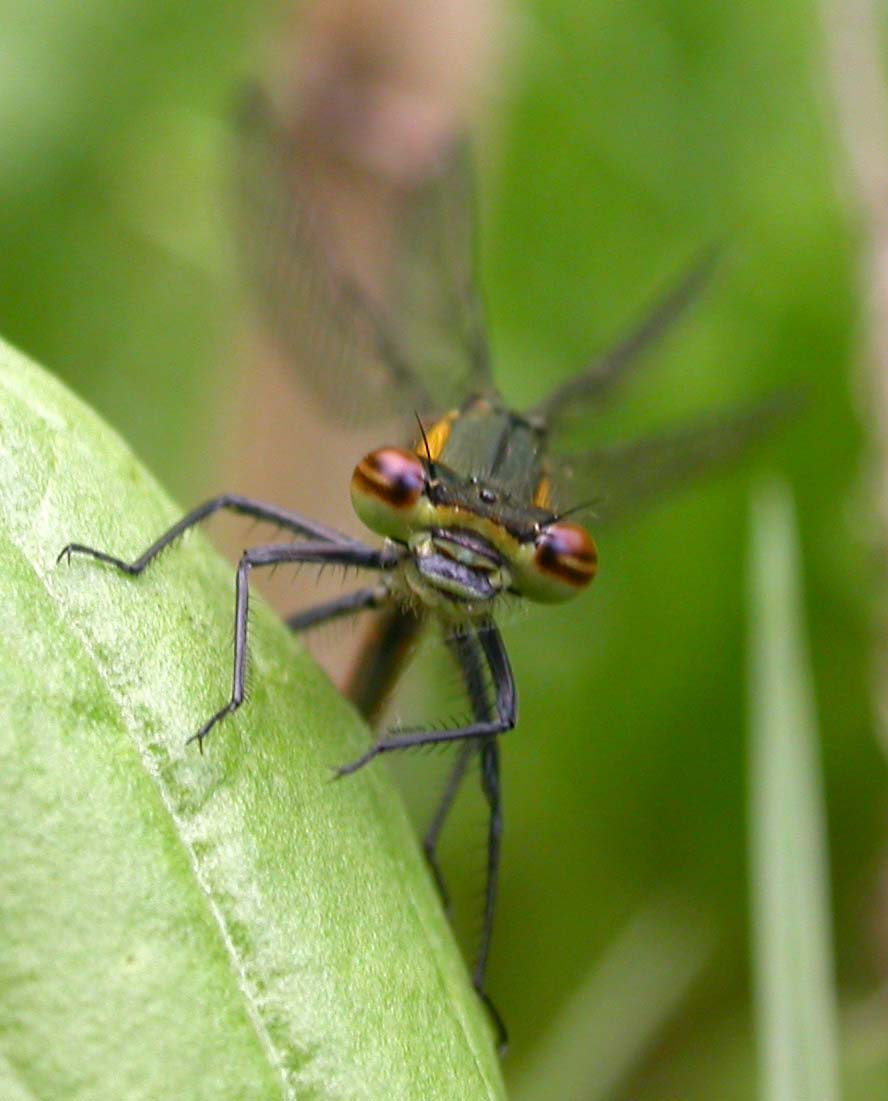
I found a large red damselfly, Pyrrhosoma nymphula, resting in M3 by Thistle Moor yesterday evening. It was half asleep so quite easy to photograph.

It is one of the first damselflies on the wing and I usually see a few around the garden each year. I am pretty sure they breed in the small pond about 6 or 8 metres from M3.

I was struck by the similarity in colour and pattern of the damselfly's body to that of the highly venemous coral snake - see top picture - and this is, presumably, an attempt to discourage predators by looking like something that might be toxic. Coral snakes do not occur in North West Europe and my guess is that this is simply parallel evolution of deterrant colours and pattern.

Sunday, May 07, 2006

Thyme-leaved speedwell


Another flower has opened in The Waste, the thyme-leaved speedwell, Veronica serpyllifolia. I found one plant of this about 18 months ago by Yew Edge on the west of the metre square and there are some plants growing there today that may be seedlings of this. The new one though has come up in the grassland at the highest pont of The Waste and is well able to compete with the quite vigorous other plants there.

Wednesday, May 03, 2006

The ash-black slug


There was a large black slug, as is often the case, under Pitfall Rock today. While photographing other smaller things I noticed that the slug had a rather fine fingerprint pattern on the mantle (just behind the head - see above), so I took a picture of this. I also managed, by accident rather than design, to get a picture of the black-spotted tentacles (also above).

On checking the identity in the Field Key to the Slugs of the British Isles I discovered that it was an ash-black slug (aka ash-grey slug) Limax cinereoniger. In the literature it says this is a species of ancient woodland, indeed it is regarded as an indicator species. Although we have an ancient woodland at the bottom of the garden, it would take some stretch of the imagination to regard M3 as wooded, whether anciently or not. The slug is officialy designated a 'Notable/Nr' species(meaning 'regionally notable).

One conchologist has said this species does "not occur in woods which look like or are known to be plantations, and their discovery is probably as good a piece of evidence as can be had that a wood is on a primaeval site."

Tuesday, May 02, 2006

Bugles & granfergrigs


The first bugle flowers opened on May Day, a fitting welcome for summer (if one takes the seasons as starting on the cross quarter days).

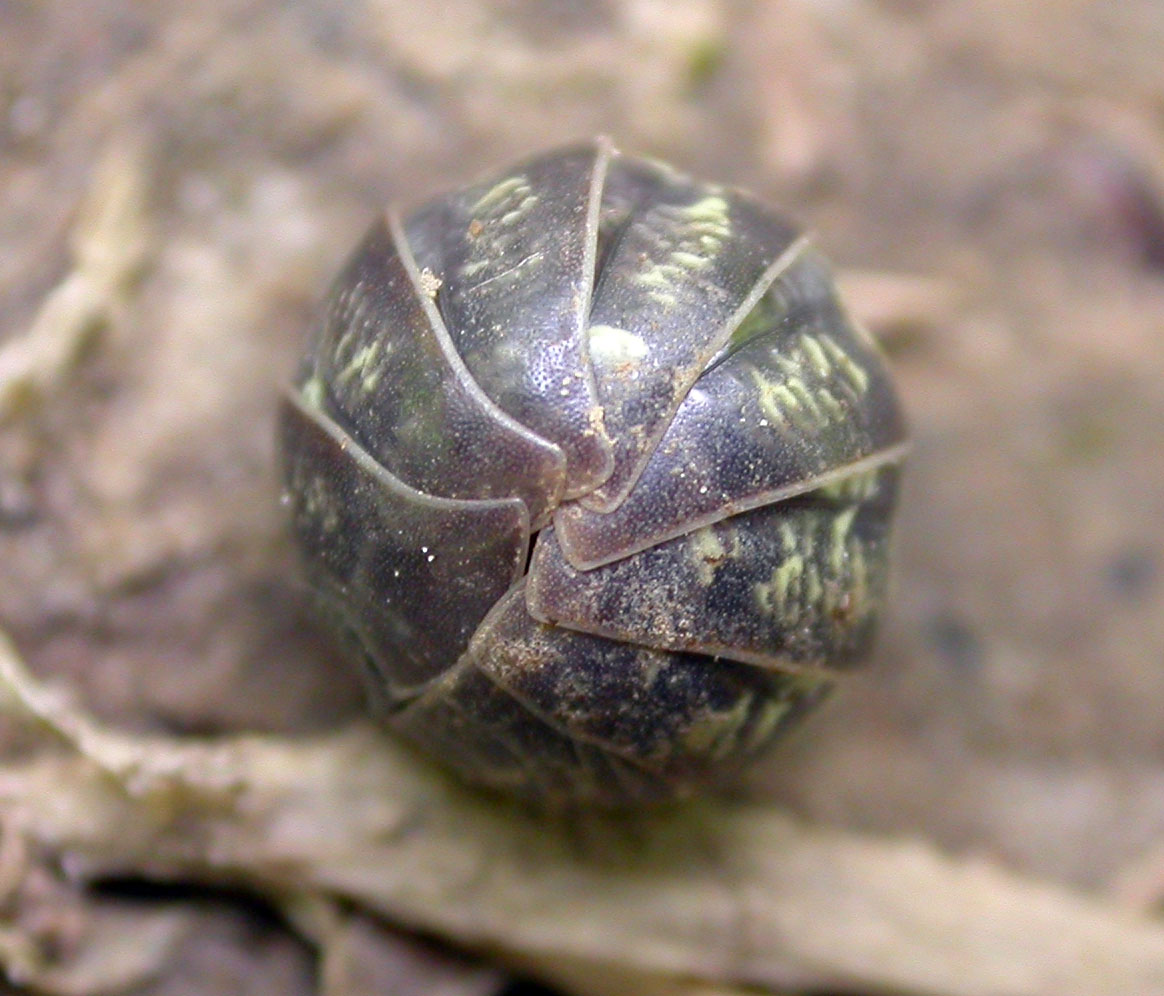
The Metre also seems to have been invaded by the common pill woodlouse, Armadillidium vulgare ('granfergrigs' as we used to call them when I was a child in Somerset). There were six or eight yesterday and this is usually the scarcest of the six species I have so far found in M3. For several to appear at once implies that they go round together like the Seven Samurai. As the picture above shows, A. vulgare always rolls up into a perfect sphere with all its bits tucked in.

Sunday, April 30, 2006

On the half-shell


On the edge of The Waste, just in front of my green plastic bench, I discovered a hole in the earth where the grass had been parted and an animal had dug. The base of the hole consisted of half the shell of an acorn like the remains of a Viking ship burial.

The kernel of the acorn had gone and the upper shell lay discarded on the earth nearby. I had not noticed the burying of this acorn, presumably in the autumn, and probably by a grey squirrel, but its rediscovery has deprived me of a baby oak tree though I rather like the idea of acorns rather than oysters 'served on the half-shell'.

Saturday, April 29, 2006

Another dandelion


The larger of the two dandelions in the square metre itself has flowered after a two-year struggle and appears to be Taraxacum undulatiflorum, the wavy-flowered dandelion (see above). It is a common weed of wastes and roadsides.

My plant grew originally just outside Troy Track and is one of two introductions. The other was the daisy, which has died out. There is a seedling dandelion in the quadrat which I think may be either a third species or T. pseudohamatum, but I do not think it will be mature enough to tell until next year.

I caught two males of a fungus gnat, Trichonta vitta, new to the square, so it has been a good day.

Sunday, April 23, 2006

Rabbit attack


I was rash enough to leave the wire protector off the dandelion flowering in The Waste and, by morning all the flowers and about half the leaves had gone, eaten overnight by a marauding rabbit.

This sort of thing faces reserve managers with the conundrum of whether to put guards round rare plants (hardly natural) to protect them from the introduced rabbit. My cop out is to put the guard back round the dandelion (which will recover) and go on thinking about the issue.

Friday, April 21, 2006

Bramble problems


The brambles are not growing so fast, or so vigorously this year and I think they are being slowed by the cane-spot fungus Elsinoë veneta that has attacked most of last year's shoots.

Things like this are not as difficult to identify as they seem. The standard book, Microfungi on Land Plants, lists what is found on which plants and which parts of the plant - stem, leaves etc. The most likely candidate can then be selected by reading the descriptions and a web search will often bring up some good pictures.

Monday, April 17, 2006

Dandelion delights


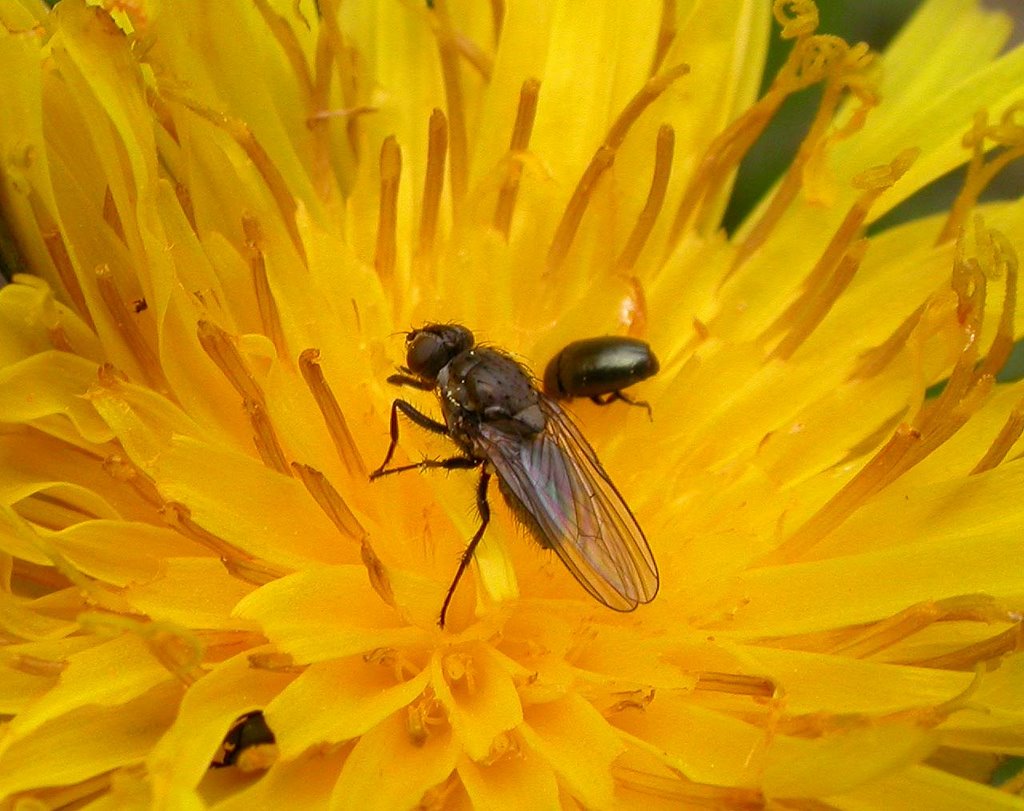
There are now two dandelion flowers out in The Waste and they are popular with early-flying insects.

The photo shows a Calypterate fly, probably an Anthomyid, and a pollen beetle, a Meligethes species, enjoying the feast.

Friday, April 14, 2006

A new dandelion


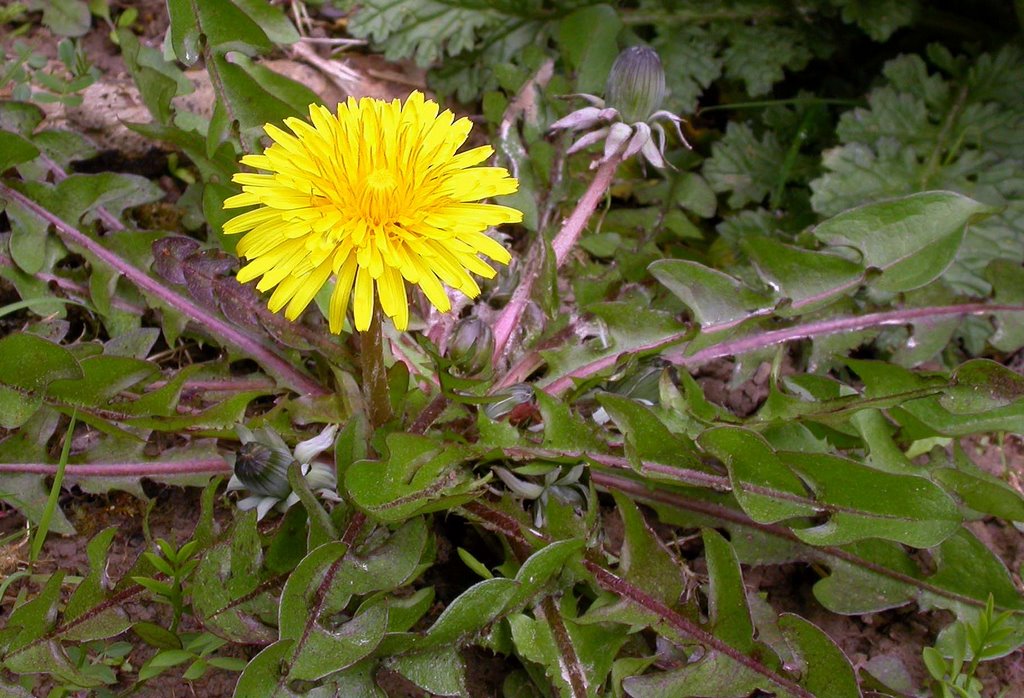
The first dandelion flower of the year has opened in The Waste and I am confident that it is the microspecies Taraxacum pseudohamatum. In Dandelions of Great Britain and Ireland Dudman & Richards (1997) say it is "a very robust weed and the commonest member of Section hamata in the British Isles, and indeed one of our commonest dandelions. It seems almost confined to these islands."

In the half hour or so I was there the flower attracted a solitary bee, a hoverfly, two or three pollen beetles and a thrips.

I cannot describe the pleasure this common 'weed' has given me from its first detection to today's appolonian climax, though there are many flowers and the seeds still to come.

Sunday, April 09, 2006

Wavy bitter-cress


In the sunshine today the first flower of the year opened on a very depauperate example of wavy bitter-cress, Cardamine flexuosa, growing in The Waste.

One might easily think the plant was hairy bitter-cress, but I know that the many examples now growing in M3 and The Waste are seedlings from the larger plant of flexuosa that flourished, and set much seed, last year.

Saturday, April 08, 2006

Shoehorn pods & bee flies


For the first time I looked closely at the now empty seed pods on the dead superstructure of last year's common centaury, Centaurea erythraea. They have split in two and curved outwards like upside down shoe horns facing each other, small launchpads for the dust-like seeds.

The bee flies, Bombylius major, are back hovering across the grass and settling here and there. The solitary bees on which they are parasitic are back too,working the blossom on the sallow or the box bush.

Wednesday, April 05, 2006

The ants are back


After many cold months the wrinkled ants, Myrmica ruginodis, have reappeared under Gingerbread Refuge exactly as they did last year, but about a week later. I think they lay their eggs at this stage as in summer they move on to other sites, returning to the Refuge from time to time. Though it is cold they are very busy building earth chambers and I have seen several foraging workers out in the open.

Some of the literature indicates that the wrinkled ant has one stable nest site, though little is known, it is said, about how these are founded. However, from my observations they seem to be very restless, with the entire colony always moving to new quarters during the warmer months and disappearing from sight in winter.

The first solitary bees are on the wing now and I caught a very early dance fly Rhamphomyia sulcata (Empididae). Behind the square metre the box bush has started flowering, also rather late, and the flowers usually attract large numbers of insects on sunny mornings (not so many in the afternoon).

Monday, April 03, 2006

Sallow flower flies


The small black anthomyiid flies of the genus Egle are very common now, resting on any pale coloured raised object to warm up in the sun. There were fifty five on my seat by Troy Track yesterday, of two or three species.

The name 'Egle' was coined by Frenchman Robineau-Desvoidy in 1830 and may refer to the eponymous Lithuanian folk heroine who turned into a fir tree. The word also means 'fir tree' in Lithuanian. However, Egle flies have a symbiotic relationship with sallows. They help to pollinate the flowers and the larvae develop in them after they have fallen, so both species benefit, neither is disadvantaged.

Saturday, April 01, 2006

First butterfly of 2006


A red admiral with a large chunk out of its wing drifted across M3 in the first of the April sunshine and settled for a while in the box bush. This is early for this species and it had probably overwintered. So far as I know, the butterfly is still not considered a breeding resident in Britain and these occasional overwintered examples are not thought to be able to reproduce.

A female blackbird went hopping right across the quadrat with some bits of grass an moss in her beak. It was the one that is quite tame and often comes close to me. After visiting M3 she concentrated her efforts on some wet moss in a puddle, sploshing about like a child in the mud as she pulled and tugged at desireable strands.