Tuesday, March 13, 2007

Soft-rush (Juncus effusus) discovered


At the north western end of Troy Track I spotted some rigid green leaves overtopping the grass. These turned out to be a plant of soft-rush (Juncus effusus) that must have been growing, undetected, for at least six months.

It reinforces my observation that it is impossible to ‘see’ everything, even in a small area, on one or several occasions. Seeing things like this rush for the first time seems to occur when, for some reason, conditions in the brain are right.

Monday, February 12, 2007

Pointed spear-moss (Calliergonella cuspidata)


These moss shoots are the first species I have added to the overall tally for the project in 2007. I spotted them through close-focus binoculars on the more or less bare ground of Great Plantain Desert.

I have come across pointed spear-moss quite often in the neighbourhood, but it seems normally to prefer rather wetter places than the Emthree project. However, it now joins list of plants recorded that are said to prefer moister soils: square-stalked St. John's-wort, gipsywort, marsh thistle, greater bird's-foot trefoil. All of these grow well in quite dry, or even very dry, places in Emthree and/or The Waste. Maybe they can grow almost anywhere and simply have a better ability than some to cope with wetter soils and are normally out-competed on drier ones.

The pointed leading shoot is very distinctive and it is often quite easy to pick out the moss while walking along.

Sunday, February 11, 2007

Rosette life v.2


After some recent frosts it has rained heavily enough to fill the 'pond' at the western end of Troy Track.

It is quite rare for water to stay about for so long on our free draining soil, but the ground is waterlogged now and the hosepipe ban has been recently lifted. Compare the shot above with the one taken on 2 February.

Friday, February 02, 2007

Rosette life


The rosettes above are all of wintergreen plants that have developed since late summer on the south facing bank of the still empty pondlet I have dug at the end of Troy Track.

On the left there are two smooth hawksbeards (Crepis capillaris), then - I think - a smooth sowthistle (Sonchus oleraceus) with a marsh thistle (Cirsium palustre) on the right.

The leaves clearly have a tendency to push themselves flat against the substrate, presumably to get the maximum sunlight, and I vaguely wondered why the lower leaves do not stand out at right angles from the vertical; did not, as it were try to make a right angle with gravity. I must try to see what happens on a north slope.

Monday, January 01, 2007

A New Year grass (Poa annua)


The 1 January 2007 was a mild sunny day and I could feel the warmth on my face as I looked around Emthree.

There were a few vine hoppers (Empoasca vitis) and bluebottles, but I did not think there would be any flowers about. However, I did find a brave spike of annual meadow grass, Poa annua, growing on Troy Track. This plant often flowers in mild weather in winter, apparently because its performance is unaffected by day length.

Sunday, December 31, 2006

Maybe a Common Bonnet at the year's end


On my last visit to Emthree in 2006 I spotted a Mycena toadstool growing in the north west corner of the Metre Square. It looks like a common bonnet (Mycena galericulata), a new record for the square.

As a start to 2007, I like this quote from R. Bruce Hull (2006) in Infinite Nature: "it will become increasingly obvious that deciding which natures should exist requires imposing human values for which natures we want to exist.” Conservation eventually becomes a matter of design as my experience with this project shows.

Sunday, November 19, 2006

Earwig fungus


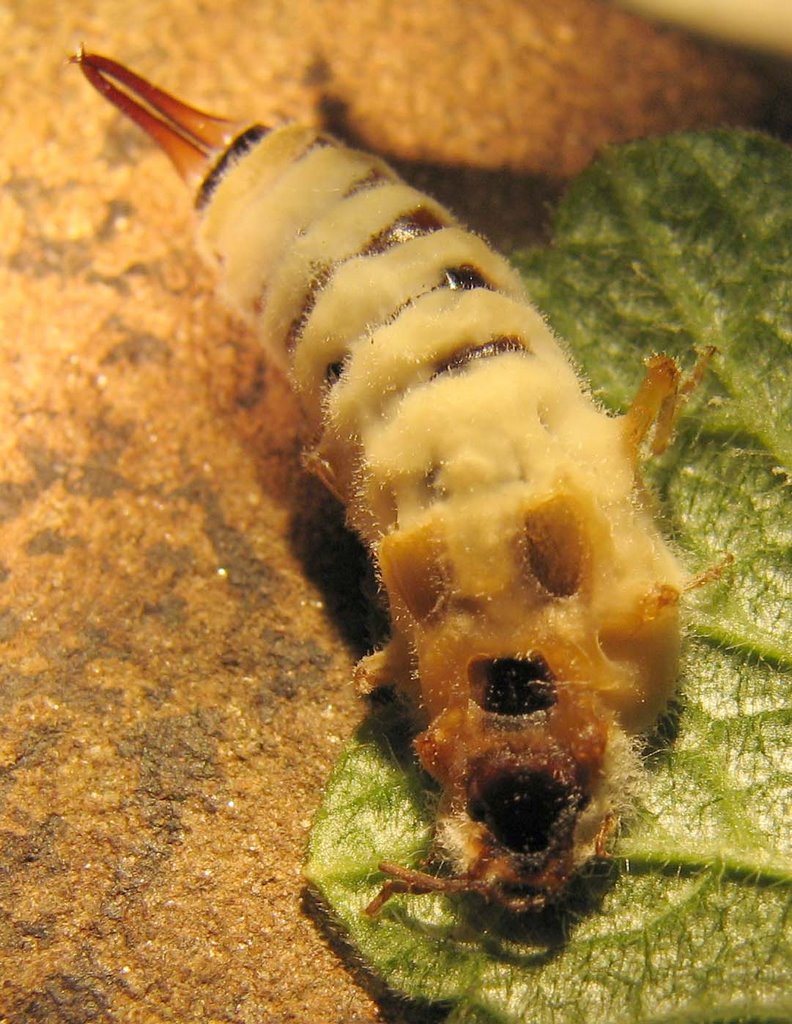
I saw what looked like a woolly caterpillar under a leaf of hogweed in Mice & Red today, but it turned out to be a dead earwig firmly stuck to the leaf blade by a fungus that had burst out of its body.

I have often seen fungus-infected hoverflies glued to grass blades, but this is the first time I have come across an earwig in this condition.

I have made some enquiries and hopefully will be able to identify it to species level in due course.

Wednesday, November 01, 2006

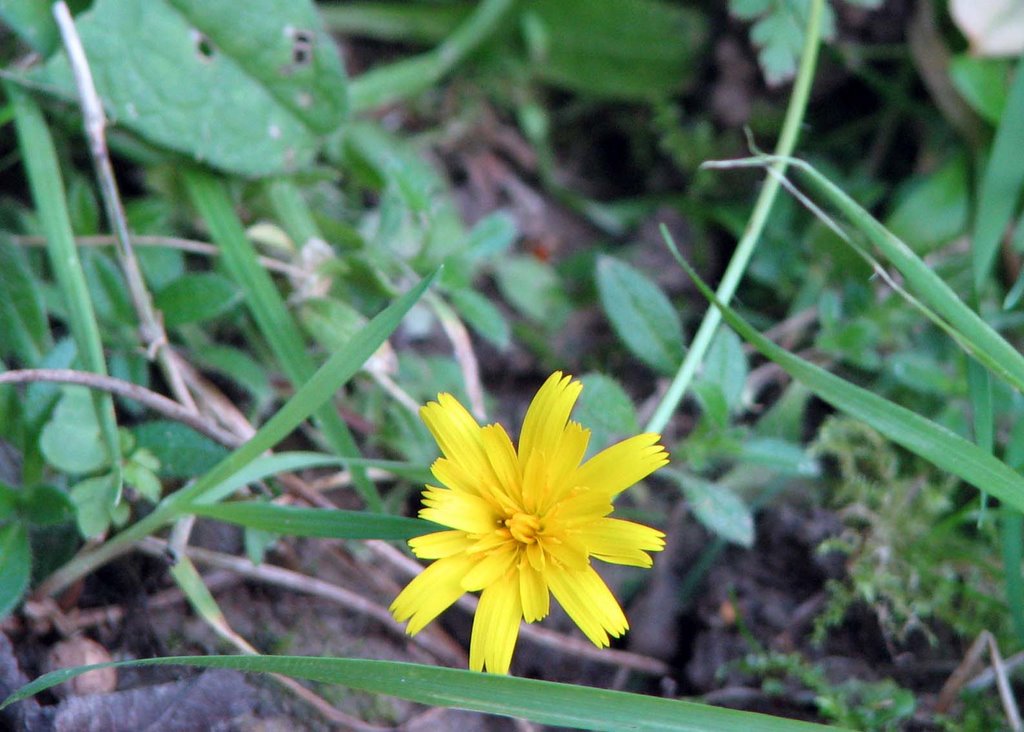
November cat's-ear


The cold weather has arrived with a near frost last night and a proper one very likely tonight. I took my first of the month pictures of Emthree and noticed that a cat's-ear, Hypochaeris radicata, has struggled into flower, one of the rather few blooms we have had from this plant this year.

Most of the cat's-ears have been eaten by night visitors, but this has survived. If it sets seed it will be a triumph of hope over reality and I believe this species is on its way to extinction in the Green Sanctuary.

Sunday, October 15, 2006

A late centaury


I noticed a tiny pink anomaly in the grass just in front of White Log and discovered the smallest common centaury, Centaurium erythraea, with two or three buds. Despite some warm sunshine, these remained doggedly shut and I doubt that seed will be produced.

Last year there were several examples of this species on Thistle Moor and in The Waste and they produced copious quantities of seed. A large number have germinated on the bare soil of Great Plantain Desert, but they will not flower until next year.

This October straggler must, I think, have germinated in 2005 from seed that may have been dormant for some time as there had been no flowering plants in 2003 or 2004. Welcome stranger.

Sunday, October 08, 2006

Butterfly Rock


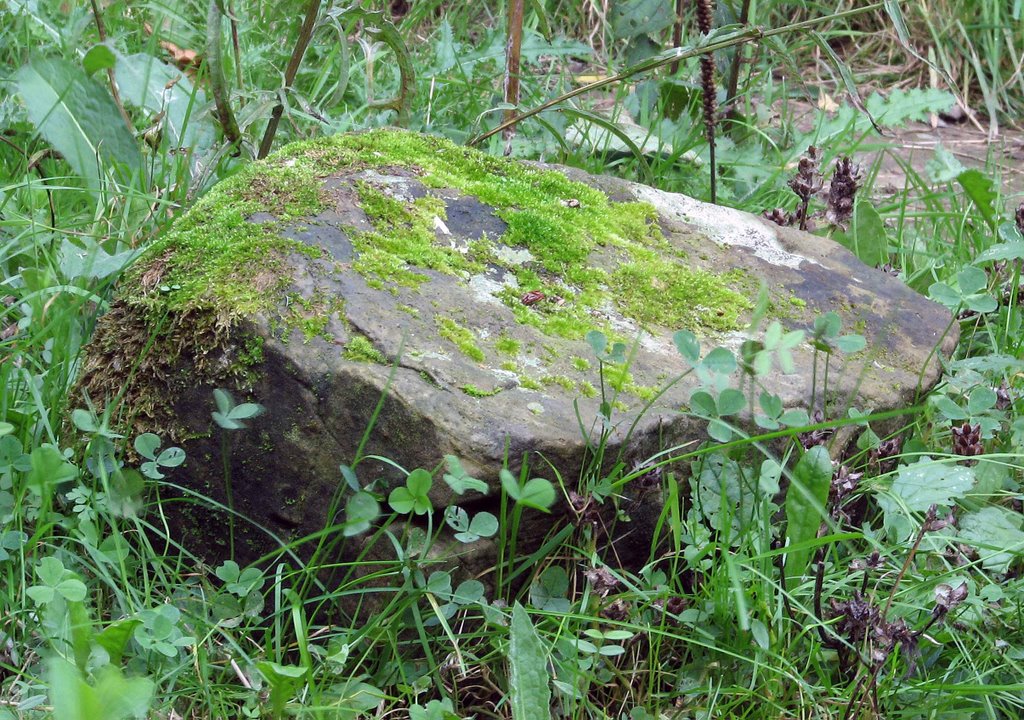
I studied Butterfly Rock today. The top, bare when I put it in The Waste in March 2005, is now a complex tapestry of several moss and lichen species scattered with bits of berry, snail shell and bird droppings like the top of a decorated cake. It just does this, unbidden by me, despite being in full sun in no shady or moisty place. It is, of course, a fine bird perch and their detritus has no doubt helped produce a nutrient layer.

The colours on this rock at this autumn season are a delight: dark and pale green, greenish yellow, black, brown and greenish grey.

In addition to the grasses, the vegetation around the rock (all visible in the picture) includes white clover, smooth hawksbeard, selfheal, herb robert, knapweed, ragwort, marsh thistle, greater plantain, sorrel and narrow-leaved vetch

Tuesday, October 03, 2006

The ragwort dies


The large plant of ragwort, Senecio jacobaea, finished flowering and lost all its leaves so on 1 October I cut it back to the level of the stake of beech driftwood I call 'The Gnomon'. I have watched it through many transformations: as a small seedling, as a great cabbage of a rosette this spring. Then as the five stalks climbed upwards to well over a metre tall and attracted a wide range of insects.

Despite the summer size and vigour of this ragwort, the other plants round about, as the picture shows, seem to have grown without undue check. It is a mystery to me quite where the nutrient comes from.

Another puzzle is why large, robust plants like this die after a season while other, often much smaller species may persist for many years. Just behind The Gnomon there is a baby birch, now two years old. Above it some hypericum that struggled while the ragwort grew, but is now claiming its placed in the sun. Somehow the ragwort seems programmed to die young while the birch,in fifty to seventy years time may die due to windthrow or fungal attack, but not because it is programmed to die after a given period.

The annuals and biennials do, maybe, evolve more rapidly, but it will be many years before the birches and other young trees can reproduce. Over long periods of time have the annuals survived better in some contexts and the perennials better in others? If they have it is difficult to explain why the two now grow so happily together, though the short-lived do make good 'nurse crops' for the longer lived.

Tuesday, September 26, 2006

Glow-worms and sawflies


Today I found a glow-worm larva (top picture) under Gingerbread Refuge in Emthree. It was not fully grown, but nearly so and probably in its second autumn. It will remain much the same size until next spring when it will feed up quite rapidly on snails.

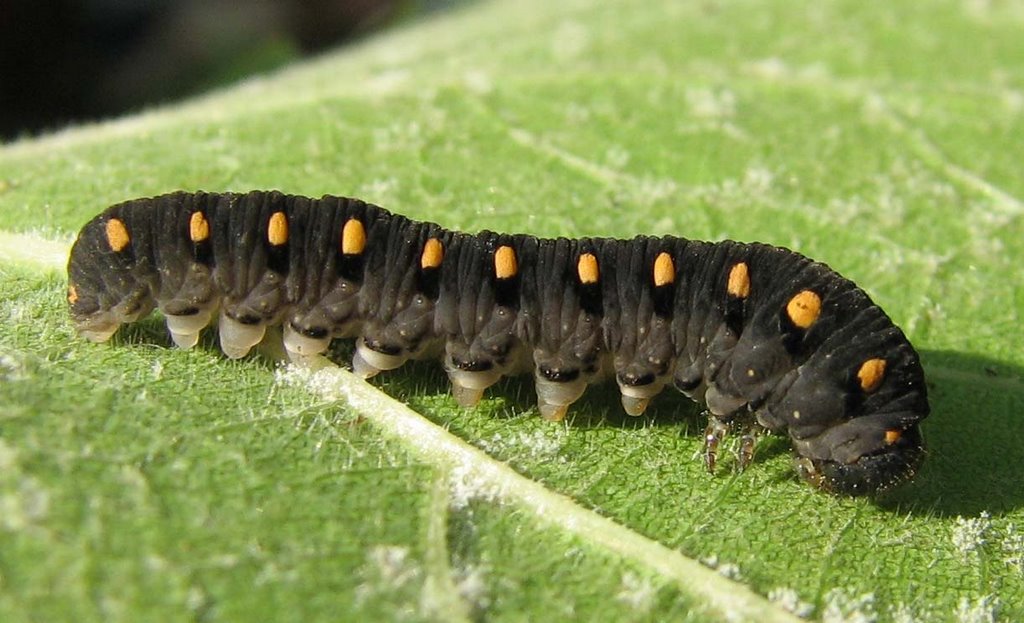
Four days ago in Friston Forest our group of recorders found several larvae of the sawfly Tenthredo thompsoni (lower picture) with a pattern curiously similar to that of the young glow-worm. There are several other not very closely related sawflies that have a similar pattern of two lines of orange spots on a dark ground.

I wonder what this signifies. It is not, to my eyes, a characteristic warning pattern saying "don't eat me", nor does it seem to be a camouflage that causes the creature to merge into its background (unless the spots are supposed to look like glints of sunshine on a dark ground).

Suggestions will be welcome.

The identity of this sawfly larva, inter alia, is the subject of much dispute among members of the sawfly discussion group. In may be a small Abia sericea, or a Tenthredo johnsoni. Anyone who thinks they know is welcome to comment.

Saturday, September 09, 2006

Platycis minuta - a beetle revealed


In the last 24 hours Emthree suffered one of its rather rare catastrophic events. White Log, the decaying central divider of birch, was attacked by maybe a badger or woodpecker and shredded bits of wood were scattered about all over the place.

However, I noticed a small red and black beetle, Platycis minuta, liberally dusted with fragments of shredded wood, resting in an exposed crevice. This species, which I have found in our garden once or twice before has a 'Nationally Scarce' status (Notable/Nb) and is associated with ancient woodland rather than my dry, semi-improved grassland, though there is ancient woodland 50 metres or so away.

In general appearance the beetle is remarkably close to another ancient woodland saproxylic species, the black-headed cardinal beetle, Pyrochroa coccinea, but it is only about half the size and the thorax black instead of red.

Wednesday, September 06, 2006

Spider-hunting wasp, Anoplius nigerrimus


Every year we get quite large numbers of these black spider-hunting wasps in Emthree. They are the most restless creatures, running across the ground, logs or stones with their antennae in constant motion; exploring holes and crevices, occasionally making short flights.

Spiders are very aware of their presence and I have seen them draw themselves up in a 'ready to run' position if a wasp is about.

On one occasion a wasp and its struggling spider victim fell in my little Onelitre Pond in Emthree, battled away for a bit on the water surface and managed to get back on to dry land still fighting.

It may be that the current scarcity of wolf spiders is due to the activities of the hunting wasps last year. However, they may now find there is a shortage of fresh spider meat which will reduce their population and allow the number of spiders to rise again.

Saturday, September 02, 2006

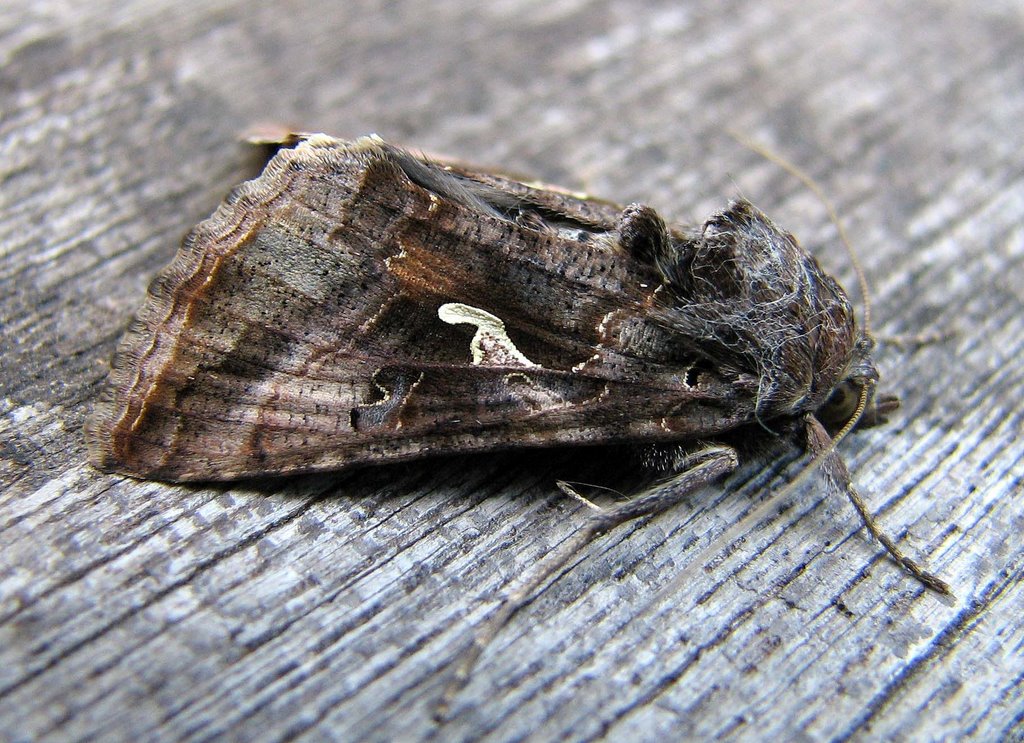
Silver y moth, Autographa gamma


Earlier in the summer in south east England there was an invasion of silver y moths, Autographa gamma, presumably from mainland Europe. On 1 August I found the caterpillar above on the large ragwort plant in Emthree and I reared it indoors to an adult (see also above).

Some of the silk from its cocoon seems to have stuck to its front end, but it was in perfectly good shape and after posing for its picture, was released.

Friday, September 01, 2006

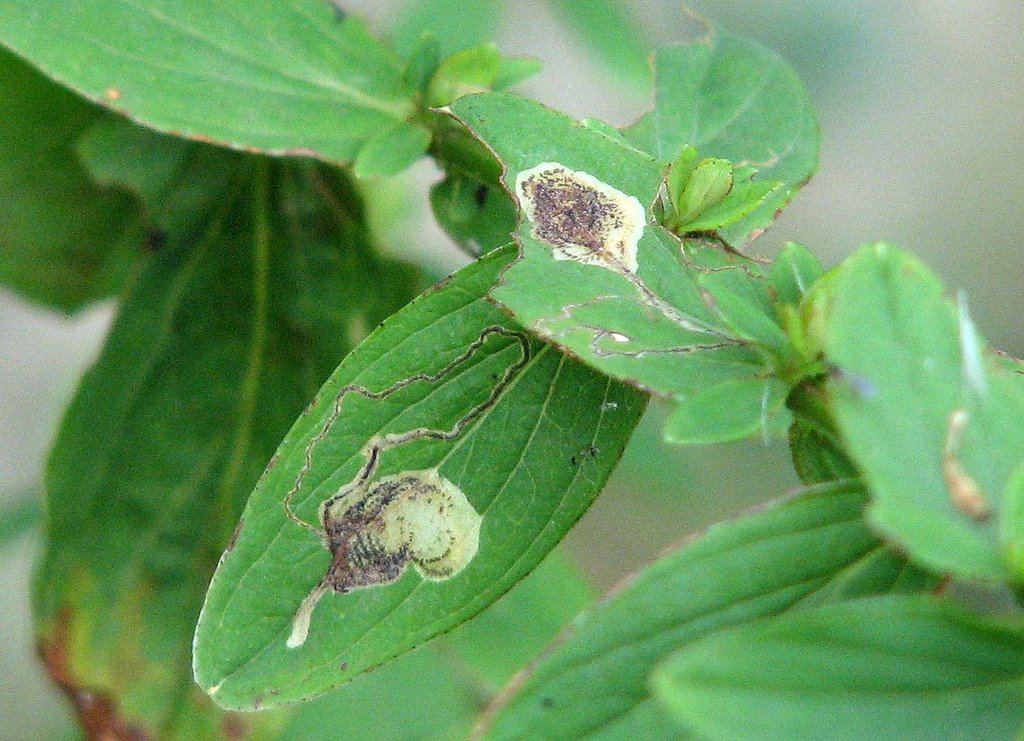
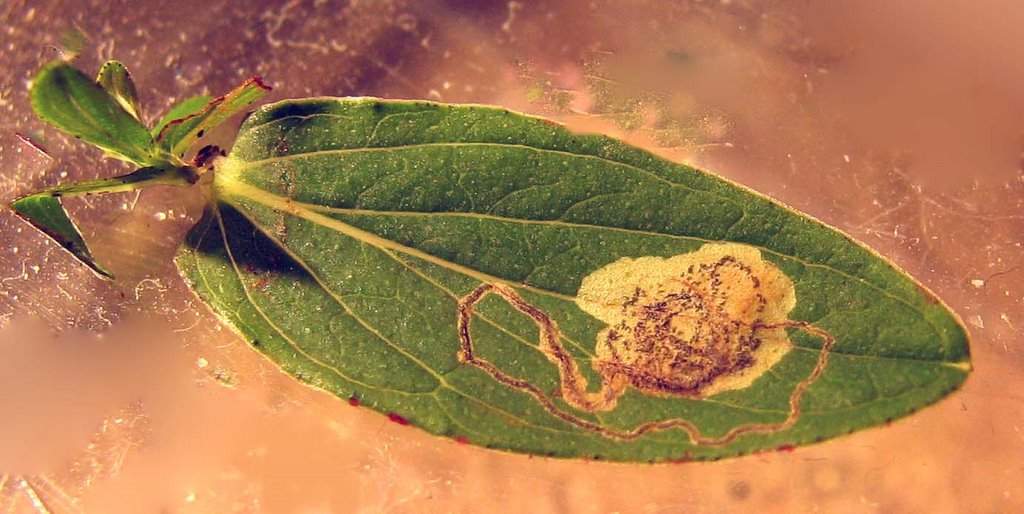
Fomoria septembrella - the tiny moth emerges


Today, appropriately for 1 September, the tiny micromoth Fomoria septembrella, the johnswort pigmy, emerged from a leaf mine that I collected in The Waste on 19 August from the square-stalked St. John’s-wort, Hypericum tetrapterum.

Though only about 2.5 mm long, it was a beautiful, wonderfully wrought creature with brown, silver-marked wings folded over its back and a cap of bright orange scales on its head.

After I had taken some pictures (not easy), I let it go by the still-flowering hypericums in Emthree and it took to the wing like a shard of brown glass.

I suppose there are some advantages to being as small as this. You can spend much of your life inside an edible leaf and are too little to be readily visible, or appetising to a wide range of predators.

Anyway, fare well tiny friend.

Saturday, August 26, 2006

New lichen, Lecanora campestris


Standing idly in the rain yesterday, I noticed a sort of grey smear like some distant nebula on the sandstone rock in The Waste. There have been various stains of an indeterminate nature on this rock and others in Emthree, but today I could clearly see the small brown jam tart-like fruiting bodies that revealed Master Smudge's identity as a lichen.

Consulting with books led to the conclusion that it might be Lecanora campestris and this was confirmed by Simon Davey, the Sussex Lichen Recorder. L. campestris is an abundant species in the south and, among other habitats, it likes to grow on nutrient enriched silaceous rocks. In this case the repeated cracking of snails by our garden thrush must have produced a rich patina of snail juice and bird poo that has no doubt fostered the growth of this lichen. At this rate it will be no time at all before we have a layer of soil on the rock.

Saturday, August 19, 2006

Phaonia on Hypericum


Having said in an earlier posting that I saw rather few insects on the square-stalked St John's-worts in M3, today I noticed this muscid fly, a Phaonia species (see above) enjoying its afternoon tea on one of the flowers.

There are many members of the genus Phaonia, so I am not going to hazard a guess at the species, though it is one of the common ones.

Square-stalked St John's-wort, Hypericum tetrapterum


This hypericum reaches its best in mid-August and is a distinctive mixture of flower and fruit. The seeds pods turn boot-polish brown as they ripen which adds to the effect. The plants (which are said to prefer marshy places) have increased steadily in the past few years and it seems quite at home both in M3 and in The Waste.

Not many insects visit the flowers, but there are various things that feed on the leaves. One is the larvae of the tiny Johnswort pigmy moth, Fomoria septembrella, that make distinctive mines on some of the leaves. I have brought one leaf indoors to see if I can breed out an adult moth.

Friday, August 04, 2006

Too deep for tears


There is a great summer stillness under the high cloud blanket. It is our 48th wedding anniversary and that distant commemorated day seems such a long time ago.

An autumnal theme is starting to prevail in M3: dry grass, leaves fading from pale buff to umber black, often fretted with holes by July insects or scribbled with their leaf mines.

There are a few weary bees on the flowers gathering the last of the honey and pollen.

I sat thinking about the reasons why some people respond passionately to nature while others are little moved, or indifferent. Immanuel Kant in his Critique of Judgement (1790) argued that ‘enjoyment’ is the result when pleasure arises from sensation, but judging something to be ‘beautiful’ has a third requirement: sensation must give rise to pleasure by engaging our capacities of reflective contemplation.

The ardent naturalist seems often to be moved to a deep and meaningful contemplation by what is perceived as the beauty of wild things.

Maybe Wordsworth had read Kant. His Intimations of Immortality from Recollections of Early Childhood completed in 1804, the year of Kant’s death, ends with the lines:

Thanks to the human heart by which we live,
Thanks to its tenderness, its joys and fears,
To me the meanest flower that blows can give
Thoughts that do often lie too deep for tears.