Tuesday, September 26, 2006

Glow-worms and sawflies


Today I found a glow-worm larva (top picture) under Gingerbread Refuge in Emthree. It was not fully grown, but nearly so and probably in its second autumn. It will remain much the same size until next spring when it will feed up quite rapidly on snails.

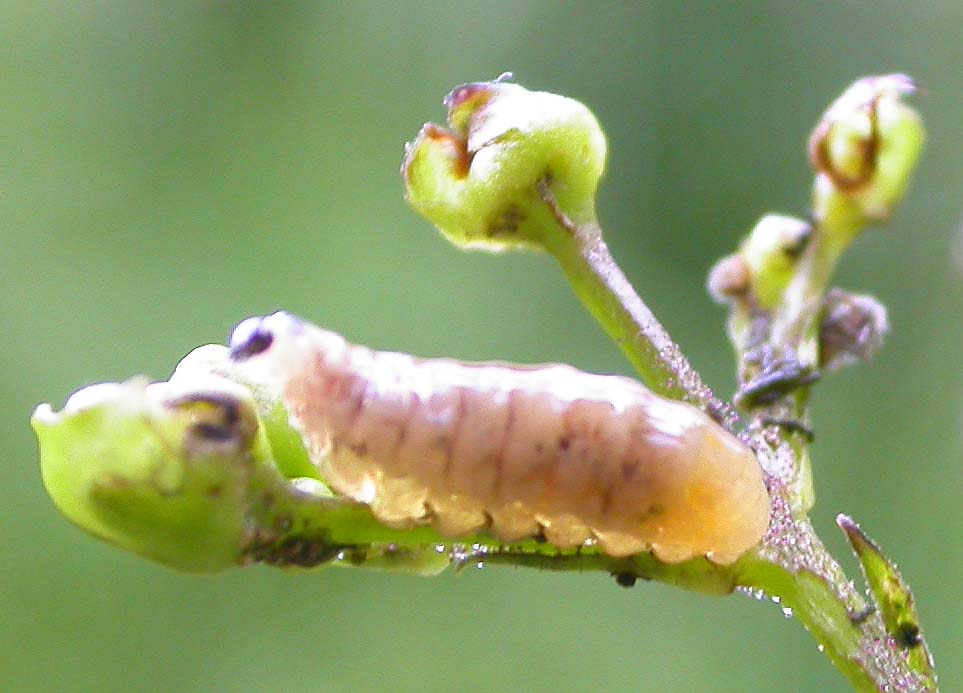
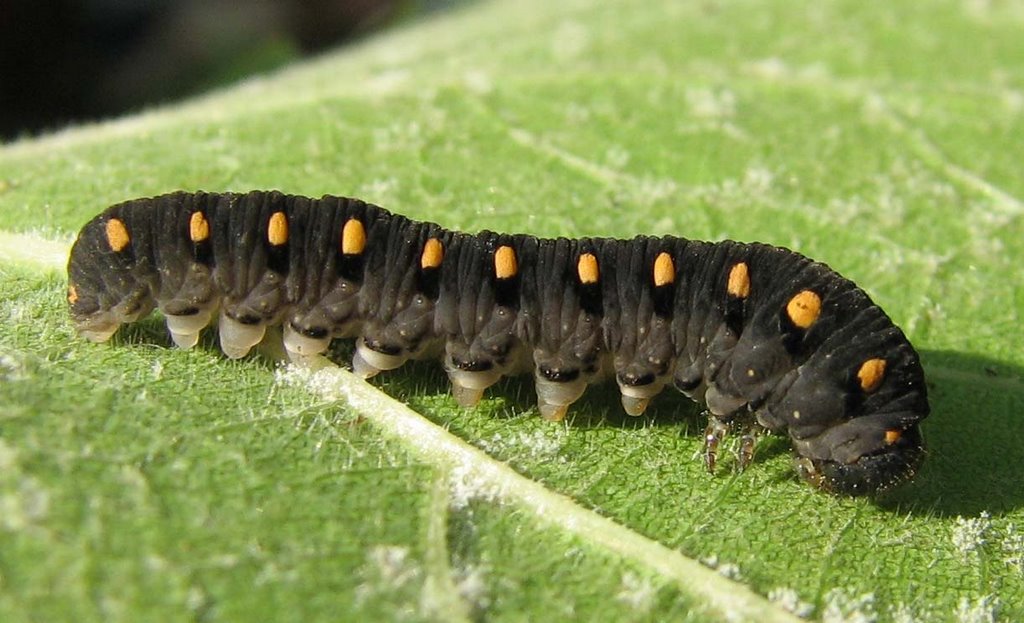
Four days ago in Friston Forest our group of recorders found several larvae of the sawfly Tenthredo thompsoni (lower picture) with a pattern curiously similar to that of the young glow-worm. There are several other not very closely related sawflies that have a similar pattern of two lines of orange spots on a dark ground.

I wonder what this signifies. It is not, to my eyes, a characteristic warning pattern saying "don't eat me", nor does it seem to be a camouflage that causes the creature to merge into its background (unless the spots are supposed to look like glints of sunshine on a dark ground).

Suggestions will be welcome.

The identity of this sawfly larva, inter alia, is the subject of much dispute among members of the sawfly discussion group. In may be a small Abia sericea, or a Tenthredo johnsoni. Anyone who thinks they know is welcome to comment.

Saturday, September 09, 2006

Platycis minuta - a beetle revealed


In the last 24 hours Emthree suffered one of its rather rare catastrophic events. White Log, the decaying central divider of birch, was attacked by maybe a badger or woodpecker and shredded bits of wood were scattered about all over the place.

However, I noticed a small red and black beetle, Platycis minuta, liberally dusted with fragments of shredded wood, resting in an exposed crevice. This species, which I have found in our garden once or twice before has a 'Nationally Scarce' status (Notable/Nb) and is associated with ancient woodland rather than my dry, semi-improved grassland, though there is ancient woodland 50 metres or so away.

In general appearance the beetle is remarkably close to another ancient woodland saproxylic species, the black-headed cardinal beetle, Pyrochroa coccinea, but it is only about half the size and the thorax black instead of red.

Wednesday, September 06, 2006

Spider-hunting wasp, Anoplius nigerrimus


Every year we get quite large numbers of these black spider-hunting wasps in Emthree. They are the most restless creatures, running across the ground, logs or stones with their antennae in constant motion; exploring holes and crevices, occasionally making short flights.

Spiders are very aware of their presence and I have seen them draw themselves up in a 'ready to run' position if a wasp is about.

On one occasion a wasp and its struggling spider victim fell in my little Onelitre Pond in Emthree, battled away for a bit on the water surface and managed to get back on to dry land still fighting.

It may be that the current scarcity of wolf spiders is due to the activities of the hunting wasps last year. However, they may now find there is a shortage of fresh spider meat which will reduce their population and allow the number of spiders to rise again.

Saturday, September 02, 2006

Silver y moth, Autographa gamma


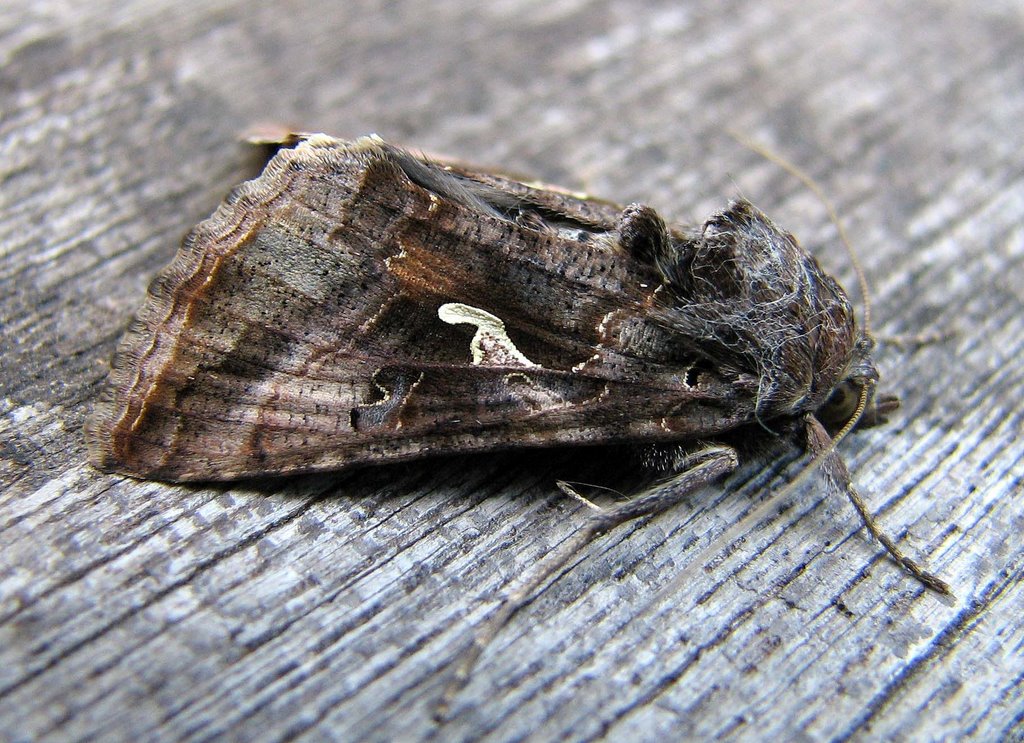
Earlier in the summer in south east England there was an invasion of silver y moths, Autographa gamma, presumably from mainland Europe. On 1 August I found the caterpillar above on the large ragwort plant in Emthree and I reared it indoors to an adult (see also above).

Some of the silk from its cocoon seems to have stuck to its front end, but it was in perfectly good shape and after posing for its picture, was released.

Friday, September 01, 2006

Fomoria septembrella - the tiny moth emerges


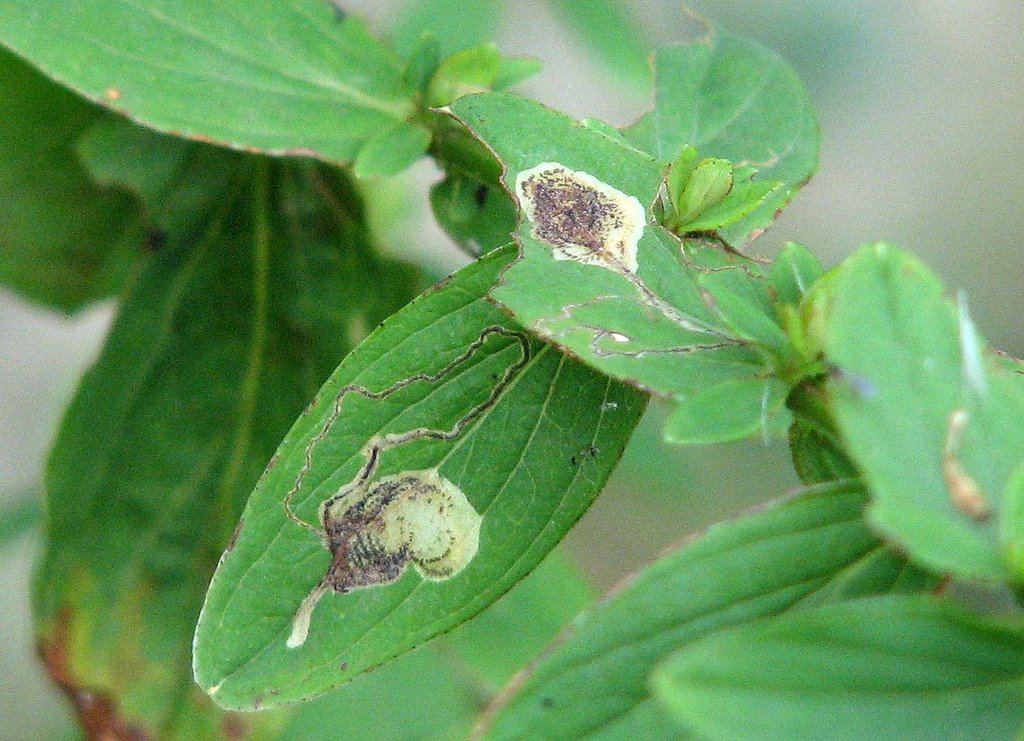
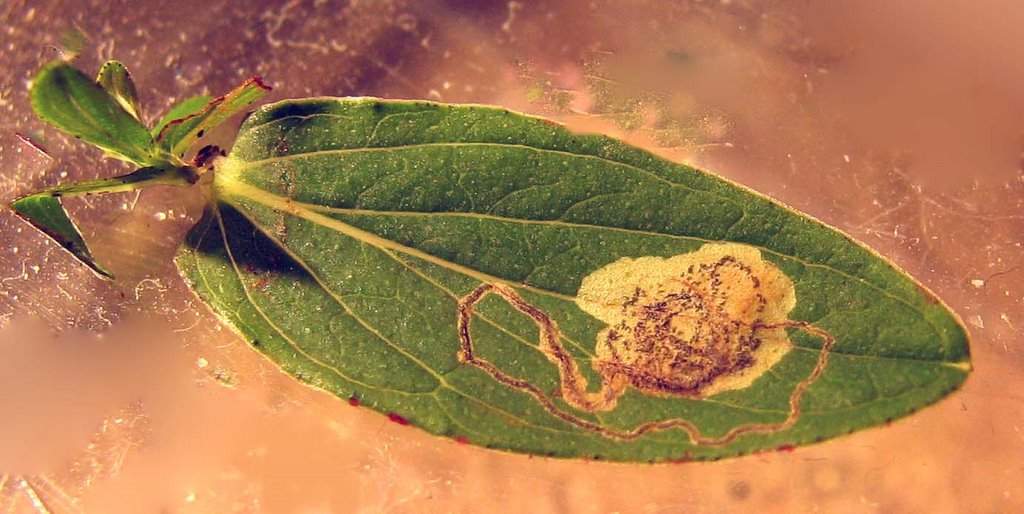
Today, appropriately for 1 September, the tiny micromoth Fomoria septembrella, the johnswort pigmy, emerged from a leaf mine that I collected in The Waste on 19 August from the square-stalked St. John’s-wort, Hypericum tetrapterum.

Though only about 2.5 mm long, it was a beautiful, wonderfully wrought creature with brown, silver-marked wings folded over its back and a cap of bright orange scales on its head.

After I had taken some pictures (not easy), I let it go by the still-flowering hypericums in Emthree and it took to the wing like a shard of brown glass.

I suppose there are some advantages to being as small as this. You can spend much of your life inside an edible leaf and are too little to be readily visible, or appetising to a wide range of predators.

Anyway, fare well tiny friend.

Saturday, August 26, 2006

New lichen, Lecanora campestris


Standing idly in the rain yesterday, I noticed a sort of grey smear like some distant nebula on the sandstone rock in The Waste. There have been various stains of an indeterminate nature on this rock and others in Emthree, but today I could clearly see the small brown jam tart-like fruiting bodies that revealed Master Smudge's identity as a lichen.

Consulting with books led to the conclusion that it might be Lecanora campestris and this was confirmed by Simon Davey, the Sussex Lichen Recorder. L. campestris is an abundant species in the south and, among other habitats, it likes to grow on nutrient enriched silaceous rocks. In this case the repeated cracking of snails by our garden thrush must have produced a rich patina of snail juice and bird poo that has no doubt fostered the growth of this lichen. At this rate it will be no time at all before we have a layer of soil on the rock.

Saturday, August 19, 2006

Phaonia on Hypericum


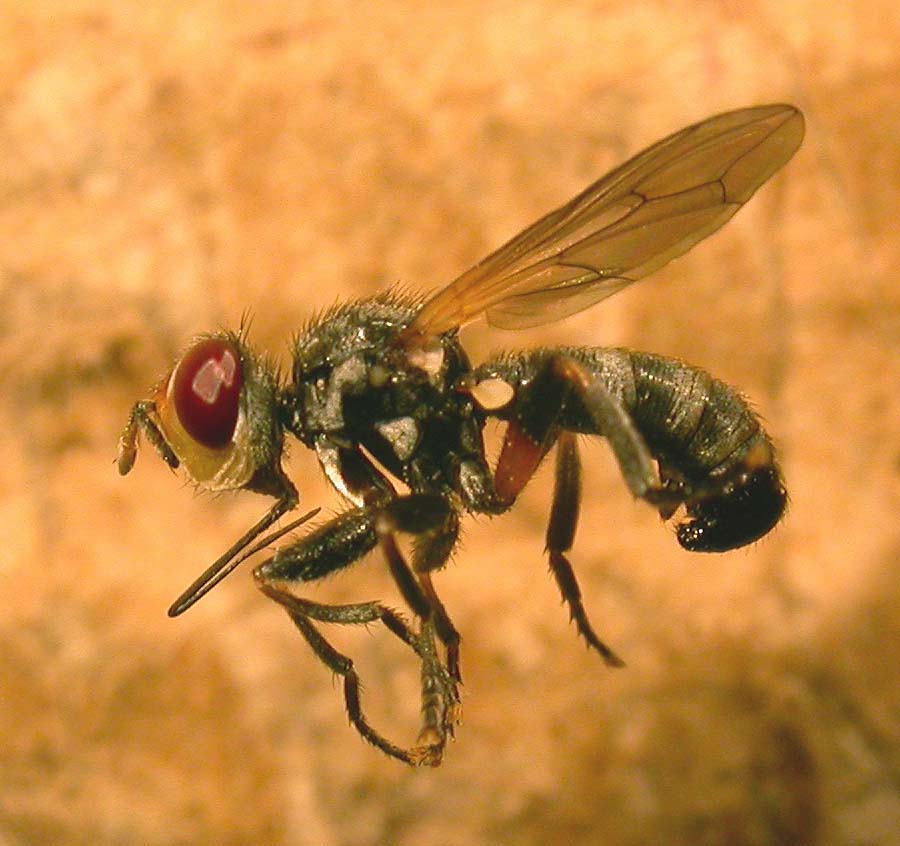
Having said in an earlier posting that I saw rather few insects on the square-stalked St John's-worts in M3, today I noticed this muscid fly, a Phaonia species (see above) enjoying its afternoon tea on one of the flowers.

There are many members of the genus Phaonia, so I am not going to hazard a guess at the species, though it is one of the common ones.

Square-stalked St John's-wort, Hypericum tetrapterum


This hypericum reaches its best in mid-August and is a distinctive mixture of flower and fruit. The seeds pods turn boot-polish brown as they ripen which adds to the effect. The plants (which are said to prefer marshy places) have increased steadily in the past few years and it seems quite at home both in M3 and in The Waste.

Not many insects visit the flowers, but there are various things that feed on the leaves. One is the larvae of the tiny Johnswort pigmy moth, Fomoria septembrella, that make distinctive mines on some of the leaves. I have brought one leaf indoors to see if I can breed out an adult moth.

Friday, August 04, 2006

Too deep for tears


There is a great summer stillness under the high cloud blanket. It is our 48th wedding anniversary and that distant commemorated day seems such a long time ago.

An autumnal theme is starting to prevail in M3: dry grass, leaves fading from pale buff to umber black, often fretted with holes by July insects or scribbled with their leaf mines.

There are a few weary bees on the flowers gathering the last of the honey and pollen.

I sat thinking about the reasons why some people respond passionately to nature while others are little moved, or indifferent. Immanuel Kant in his Critique of Judgement (1790) argued that ‘enjoyment’ is the result when pleasure arises from sensation, but judging something to be ‘beautiful’ has a third requirement: sensation must give rise to pleasure by engaging our capacities of reflective contemplation.

The ardent naturalist seems often to be moved to a deep and meaningful contemplation by what is perceived as the beauty of wild things.

Maybe Wordsworth had read Kant. His Intimations of Immortality from Recollections of Early Childhood completed in 1804, the year of Kant’s death, ends with the lines:

Thanks to the human heart by which we live,
Thanks to its tenderness, its joys and fears,
To me the meanest flower that blows can give
Thoughts that do often lie too deep for tears.

Tuesday, August 01, 2006

Today was hay-cutting day ...


Today (31 July) was hay-cutting day for Mice & Red but I was busy and out a lot and I forgot. No matter, I will go for it on 1 August.

I did make a brief evening visit and simply sat there and enjoyed the relative coolness; enjoyed watching a rosy-flounced tabby, nectaring with evident satisfaction on flowers of ragwort. These attractive little pyralid moths, Endotricha flammealis, have been much in evidence this year.

July we learn has been the hottest month on record in Britain since records began in 1914 with an average day and night temperature of 17.8°C. The main effect this seems to have had in M3 is that some of the July flowers are going over to seed more quickly. This, of course, may be because there has been an almost continuous opportunity in the daytime for insect pollination rather than the heat per se.

I have bought a simple rain gauge and have set it up near M3 to see how much rain we actually do get. On this last day of July we did have a heavy shower at about 8pm and there was more rain overnight: it won’t fill the reservoirs, but it might help some of the plants along.

Friday, July 28, 2006

A dusk visit

I try to visit M3 every day and usually write enough words to fill up a side or two of a standard 5 inch x 3 inch index card. Today I said:

A dusk visit after a day at Woods Mill. Wild silver y moths dash through the still, cricket-haunted air on a grey blur of wings. There are quieter midges and mosquitoes too like dust motes in the gloom.

Blackbirds sound the alarm in the wood and somewhere there are crooning pigeons.

No rain today and the ground looks brown and dry, but high above the quintet of flowers – ragwort, hogweed, rosebay, knapweed, hypericum - plays on like the band on the deck of the Titanic.

Thursday, July 27, 2006

Ragwort in the heatwave


In the hottest part of the day the leaves on the ragwort Senecio jacobaea in The Metre all turn upside down, exposing the somewhat silvery underside to the sunshine and presumably thus reducing water loss.

It is remarkable that they do not simply wilt but actually manage to turn through 180 degrees. This indicates there is some mechanism within the leaf stalk that twists one way or another as the temperature rises.

There was a little rain this evening, but it scarcely wet the ground. However, most of the plants do not seem particularly stressed yet.

Tuesday, July 25, 2006

A conopid fly - Thecophora sp.


Late this afternoon I was giving some detailed scrutiny to the ragwort in M3 when I noticed a small, unusually-shaped fly visiting some of the flowers. I tried to photograph it, but is was too fast and eventually I caught it.

It turned out to be a Thecophora species parasitic on solitary bees.

Again, as with the smaller plants, I often first spot things like this through binoculars having sat quietly for a while. Many entomologists, I suspect, walk through an area, but rarely stop, wait and watch, so they just do not see many of the things that are about.

I originally had this down as Zodion cinereum and I am grateful to Jere for correcting this.

Monday, July 24, 2006

Heather and holly


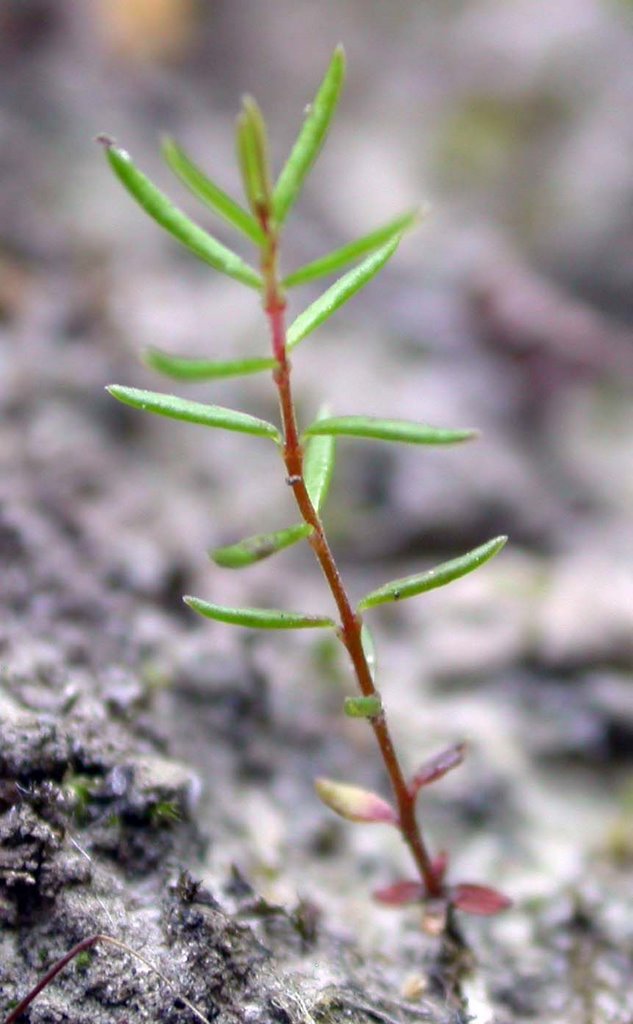
In cutting back some of the longer vegetation I have discovered two plants in The Waste that I have not previously recorded in this project. One is a holly, Ilex aquifolium, and the other (I think) bell heather, Erica cinerea.

The first of these is growing close to the southern edge of M3 while the other is in the bare soil of Great Plantain Desert. Both were discovered using close focus binoculars and the heather in particular is very tiny and inconspicuous.

Holly seeds have a long and complicated germination pattern. The seed may travel through the gut of a bird in winter and the embryo starts to develop during the following warmer months. It then needs a period of cold stratification before germinating in its second spring. So, at a minimum, the seed of my holly settled into its position in winter 2004/5.

The bell heather is, I think, unlikely to be a natural arrival as our nearest wild heather patches are some way away. We do grow a few plants in the garden, or it may have come in as seed on my boots - who knows. Given the right conditions I think this and ling, Calluna vulgaris, are quite good at spreading themselves provided they can find open,non-calcareous soil.

Sunday, July 16, 2006

Two-spotted neb moth, Eulamprotes atrella


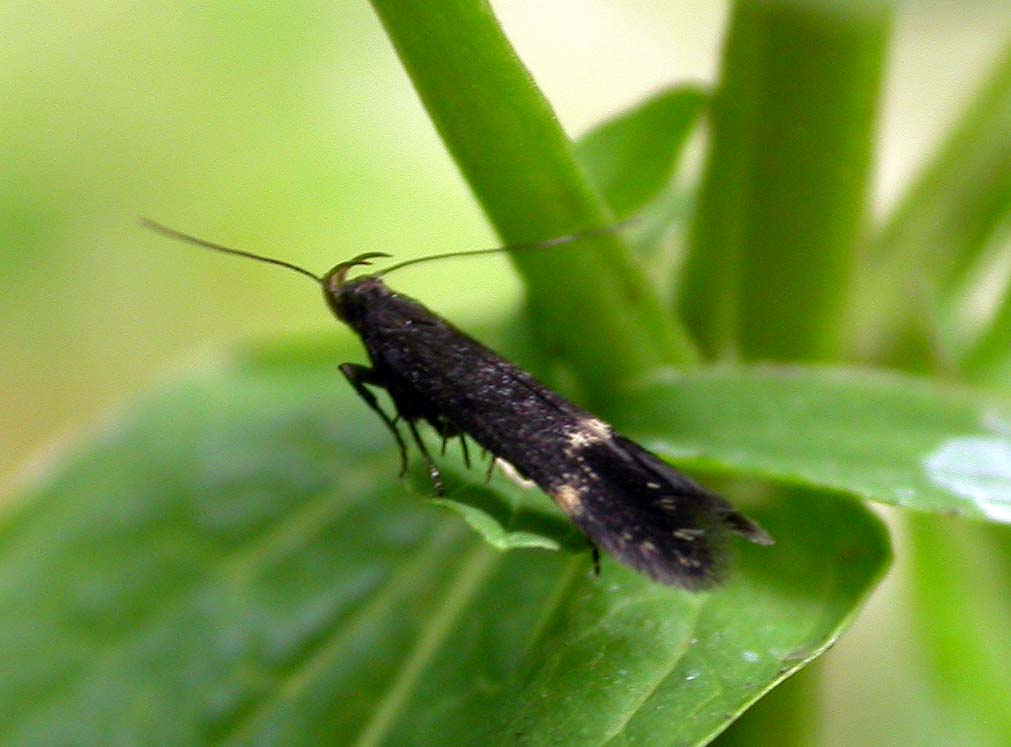
As I sat contemplating life, the Universe and all that by M3 this evening, I noticed a small black insect resting in a leaf axil of one of the square-stalked St. John's-wort plants. I managed to get a photo before it flew off and saw it again a few moments later on a figwort leaf.

It was a two-spotted neb moth, Eulamprotes atrella, a tiny micro whose larvae feed on St. John's-worts. I made no attempt to capture the insect and am confident that it can be safely determined from the photo. This is a first for M3 and the only previous Sussex record in the Sussex Biodiversity Record Centre's database is from Cow Gap at Beachy Head.

Friday, June 30, 2006

Aspects of ragwort, Senecio jacobaea


As the ragwort plants in M3 come up to flowering, they present a variety of forms from the rich purple stems below to the tightly packed buds above and the intricately cut leaves in between.

The plants will flower for many weeks, until deep into the autumn and, judging by previous years, will attract a wide range of invertebrates.

After flowering they will die and this is one of the best ways of getting rid of ragwort if you don't want it as the seeds normally only germinate in bare, scuffed ground (like overgrazed horse fields).

Wednesday, June 28, 2006

The red ant Myrmica ruginodis


This insect is one of the most intrigueing in M3 as it moves about en masse from place to place and occasionally disappears altogether. In the warmer months these ants are often busy under Gingerbread Refuge, a piece of wood at the base of the north wall of logs. Once I saw them winding their way in a column up the dead stalk of a marsh thistle plant like pilgrims ascending the outside stairway of the Malwiyya, the spiral minaret of the Great Mosque of Samarra.

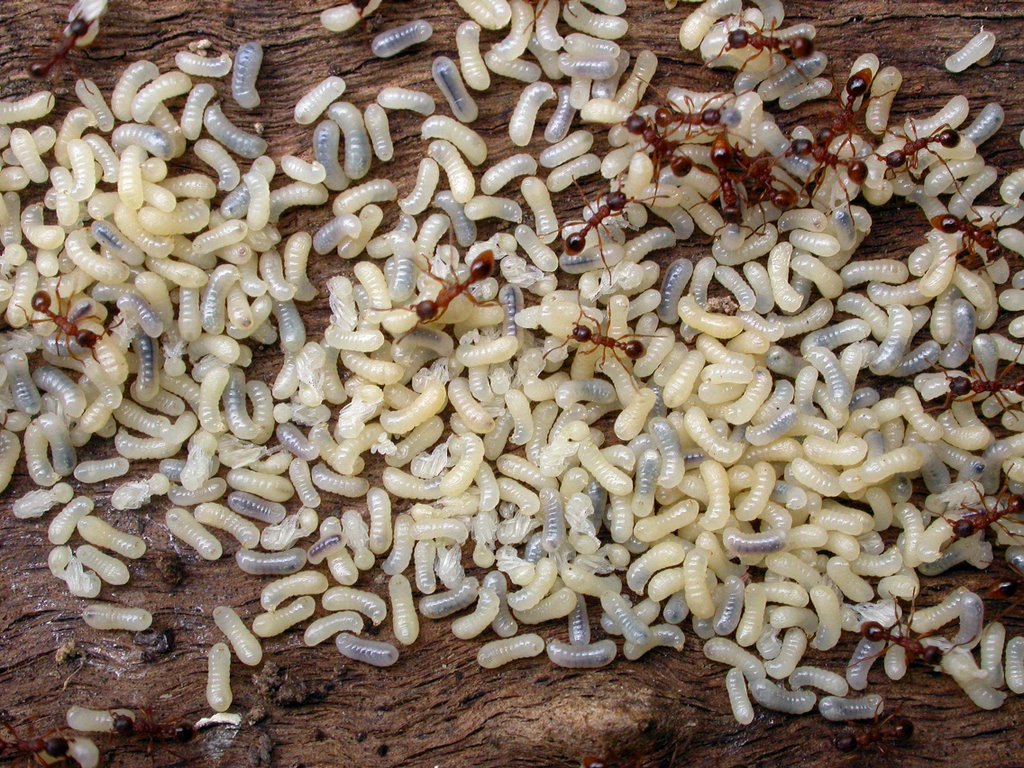
In winter they go to ground somewhere and emerge during the first warmer days of spring. Recently they abandoned Gingerbread Refuge, but a few days ago they started coming back and today I found them with the brood of larvae (see photo above) which, I suspect, must have been brought up from secret chambers somewhere underground to be in a warmer place so as to complete their development more quickly.

As with the slugs, it is difficult to understand quite what these and the other ants live on. Whatever it is there must be plenty of it, but all I ever see is the stray worker lugging some bit of detritus towards the nest.

These red ants are often accompanied by tiny, white springtails called Cyphoderus albinus that rush around among the workers like an animated pieces of scurf. When the ants go Cyphoderus goes too like a camp follower.

These ants put up with a lot from me as I turn over the various refuges under which they shelter, but they are great survivors and I admire their industry and tenacity and their long season of complex activity.

Monday, June 26, 2006

Smooth Hawksbeard, Crepis capillaris


One of the most characteristic plants of M3, the smooth hawksbeard, is now flowering well and, if it is reasonably mild, it will continue into January. Like many composites (Asteraceae) the flowers of this widespread plant open in the morning and are usually closed by mid-afternoon whatever the weather.

The leaves are very bitter and, while they are sometimes used in salads in mainland Europe, they are eaten by very few animals and there are always many undamaged wintergreen plants. I have seen recipes for a country wine made from the flowers too (like dandelion wine), but I suspect there are far better options for the home wine-maker.

The plant is surprisingly polymorphic, some examples having quite deeply serrated leaves while others are almost smooth in outline. M3 has flowering plants over a metre tall and some less than 10cm. Mostly they are biennial, but some plants appear in spring and flower by late summer.

The flowers at this time of year are usually crowded with the small, black Meligethes beetles shown in the picture, but so far in 2006 they have been rather scarce. I am trying to find out if this fall in number is widespread.

Tuesday, June 20, 2006

Common figwort beetles


Recently the two plants of common figwort, Scrophularia nodosa,in M3 have started flowering. Not exactly showy things, but with a quiet, velvety brown and green beauty.

This morning I spotted several slug-like caterpillars in the flower head of one of the plants where they had been making a fine mess chewing the blooms to pieces. I think they must be larvae of one of the Ciona weevils,probably C. scrophulariae, but I shall have to wait for some adults to absolutely sure.

By the evening they had all gone, either to pupate, or because they had been eaten by something.

Sunday, June 18, 2006

An old bone


Today I found an ancient, or fairly ancient, piece of bone about 6 or 7 metres to the south of M3 on the other side of the path through The Meadow. It looks like the sawn off head of a cow's femur.

I cannot recall ever buying anything like that, so it may have been transported into the garden by a fox or badger or one of the children. Anyway, I have put it on a high point of newly cut Waste in a sunny position between Butterfly Rock and the Lyon Stone. I particularly want to see if lichens or special mosses develop on it, though a fox or badger or child may take it away before this has time to happen.

As time goes by this project looks more and more like a bower bird's nest.